
Best Hydration Strategy for Workouts (The Science of Performing Better, Recovering Faster, and Building More Lean Mass)
Updated: Oct 8
Most people don’t think their hydration strategy is holding them back. They assume their lack of energy is because they need more caffeine. They think poor workouts are due to stress, bad sleep, or lack of motivation. They chase new supplements, pre-workouts, and training programs hoping something finally clicks.
But one of the most overlooked variables in performance is often the simplest: Hydration.
Not just “drinking more water,” either.
True performance hydration is about how effectively your body absorbs, retains, and utilizes fluids to support energy production, muscular function, cardiovascular output, thermoregulation, recovery, and cognitive performance.
The reality is that your best hydration strategy for workouts can directly influence:
endurance,
strength,
force output,
recovery quality,
training consistency,
and even long-term lean mass gains.
And most people are leaving a tremendous amount of performance on the table because they underestimate how much hydration affects the body.
If you haven’t already, read Hydration for Performance: The Complete Guide and How Hydration Affects Physical Performance, because they establish the foundation for understanding why hydration impacts nearly every physiological process tied to human performance.
Hydration Is More Than Just Water Intake
One of the biggest misconceptions in fitness is the idea that hydration simply means “drinking enough water.”
But hydration is not just about fluid intake. It’s about maintaining the delicate balance between fluids, electrolytes, circulation, cellular function, and thermoregulation.
Your body is composed primarily of water. Muscle tissue itself contains roughly 75% water, and even small changes in hydration status can alter how efficiently your body performs under stress.
When people think about workout performance, they often focus on:
programming,
nutrition,
sleep,
supplementation,
or recovery protocols.
Yet adequate fluid influences all of them.
A poorly hydrated body is less efficient at transporting oxygen and nutrients. It struggles more with heat regulation. Muscles fatigue faster. Mental clarity declines. Recovery becomes less effective. Even motivation and perceived effort can change.
This is one of the reasons hydration becomes such a powerful, but underappreciated performance multiplier.
An Expert Perspective on Workout Hydration

“Most people don’t realize how much performance they’re missing because of poor hydration habits. When you improve cellular hydration and fluid balance, your body becomes more efficient at producing energy, maintaining force output, and supporting recovery. Over time, that translates into better performance, improved training quality, and potentially greater lean mass gains.”- Ariel Hernandez, Founder Human Performance HQ
What Actually Happens to Your Body During Exercise
Exercise places significant physiological demand on the body.
As intensity rises, so does heat production. Your body responds by sweating in an attempt to cool itself and maintain safe internal temperatures. That sweat loss represents more than just water leaving the body, it includes sodium, potassium, chloride, and other electrolytes essential for muscular and neurological function.
At the same time, your cardiovascular system begins working harder to deliver oxygen-rich blood to working muscles. If hydration status declines, blood plasma volume begins to decrease, which means the heart has to work harder to circulate blood efficiently.
This is where many people start noticing performance decline:
workouts feel harder,
heart rate climbs faster,
endurance drops,
and fatigue arrives earlier than expected.
📚 Research from Sawka et al. demonstrated that fluid losses as low as 2% body mass can impair endurance performance, thermoregulation, and cognitive function.
The important detail here is that performance decline often begins before obvious dehydration symptoms appear.
Most people think dehydration is something dramatic:
dizziness,
extreme thirst,
or severe fatigue.
But in reality, subtle dehydration can quietly reduce performance long before those symptoms emerge.
Blood Volume, Oxygen Delivery, and Workout Performance
One of the most important ways hydration influences exercise is through blood volume.
Blood is primarily water, and adequate plasma volume is essential for:
oxygen transport,
nutrient delivery,
waste removal,
and cardiovascular efficiency.
When hydration levels decline, circulation becomes less efficient. Oxygen delivery to working muscles suffers, and the body compensates by increasing heart rate.
This is one reason workouts often feel harder when dehydrated even if your strength hasn’t dramatically changed.
Your body is simply working harder to maintain output.
📚 The American College of Sports Medicine emphasizes that maintaining hydration status is critical for sustaining exercise capacity and thermoregulation during physical activity.
This becomes especially important during:
endurance training,
hot weather,
conditioning work,
military or tactical training,
and high-volume hypertrophy sessions.
Cellular Hydration and Lean Mass Potential
One of the most fascinating aspects of hydration is cellular hydration.
Most people think fluid intake only affects sweat and endurance, but it also influences what happens inside the muscle cell itself.
Hydrated muscle cells tend to:
function more efficiently,
maintain better nutrient transport,
support protein synthesis,
and potentially improve recovery processes.
In contrast, dehydrated cells create a less favorable environment for performance and recovery.
This is one reason hydration becomes important not only for athletes trying to improve endurance, but also for individuals focused on:
hypertrophy,
strength development,
recovery,
and body composition.
Over time, better hydration habits may help support:
higher-quality training sessions,
more consistent performance,
improved recovery,
and better lean mass retention.
This doesn’t mean hydration alone builds muscle, but it absolutely supports the systems required to perform and recover at a higher level.
The Relationship Between Hydration and Energy Production
One of the reasons dehydration feels so physically draining is because water plays a direct role in cellular energy production.
Every physiological process tied to exercise requires fluid balance:
ATP production,
nutrient transport,
muscular contraction,
and nervous system signaling.
When hydration status declines, your body becomes less efficient.
That inefficiency often feels like:
sluggishness,
poor motivation,
decreased explosiveness,
and reduced endurance.
Many people mistake these sensations for:
overtraining,
poor sleep,
or lack of discipline.
Sometimes the issue is much simpler: they’re under-hydrated.
Why Most Workout Hydration Advice Falls Short:
Most advice online is overly simplistic.
“Drink eight glasses of water.”
“Drink when you’re thirsty.”
“Just stay hydrated.”
The problem is that hydration needs are highly individual and influenced by:
body size,
sweat rate,
environment,
training intensity,
dietary intake,
and electrolyte losses.
Someone training in Tampa, Florida heat has very different hydration demands than someone lifting in a cool indoor gym.
A tactical athlete conducting long-duration outdoor training will require a different strategy than an office worker trying to improve afternoon energy levels.
This is why personalized hydration awareness matters far more than generic hydration rules.
The Biggest Workout Hydration Mistakes
One of the most common mistakes people make is waiting until they feel thirsty to drink fluids.
Thirst is not an early-warning system, it’s a lagging indicator.
By the time thirst appears:
fluid losses may already be impacting performance,
plasma volume may already be reduced,
and thermoregulation may already be compromised.
Another major mistake is relying exclusively on water while ignoring electrolytes.
Electrolytes, especially sodium, are critical for fluid retention and absorption. Without them, water can pass through the body inefficiently.
📚 Shirreffs & Sawka (2011) demonstrated that sodium significantly improves fluid retention and hydration efficiency following exercise.
Many people also make the mistake of trying to “catch up” by drinking large amounts of water immediately before workouts. This often leads to bloating and discomfort without truly optimizing hydration status.
The best water intake strategies are proactive and consistent, not reactive.
The Best Hydration Strategy for Workouts

The most effective hydration strategy begins long before the workout itself.
Hydration is cumulative. It reflects the habits you build throughout the day.
If you begin training already under-hydrated, your workout starts at a disadvantage.
This is why establishing a strong hydration baseline matters so much.
Building a Daily Hydration Foundation One of the best things you can do for workout performance is maintain consistent hydration throughout the day.
This means avoiding:
long periods without fluids,
excessive caffeine without hydration balance,
and large swings between dehydration and over-hydration.
Steady fluid intake tends to support:
more stable energy,
improved cognitive function,
and better workout readiness.
Morning fluid intake is particularly important because you naturally lose fluids overnight through breathing and sweat. Starting the day with intentional hydration helps restore fluid balance before stress and activity accumulate.
Is about preparing the body for performance.
This is where hydration supports:
blood volume,
cardiovascular efficiency,
and thermoregulation.
Approximately 2–3 hours before training, consuming fluids gradually allows the body time to absorb and distribute them effectively.
📚 The International Society of Sports Nutrition emphasizes individualized hydration strategies based on sweat rate, training conditions, and exercise duration.
Electrolytes can be especially valuable pre-workout because they improve fluid retention and support muscular function.
Hydration During Exercise
Not every workout requires aggressive hydration protocols.
A short lifting session in a climate-controlled environment has different needs than a long conditioning session in extreme heat.
During workouts, the goal is maintaining fluid balance, not over-consuming fluids.
Small, consistent fluid intake often works better than large amounts consumed infrequently.
This helps:
maintain comfort,
support thermoregulation,
and reduce excessive gastrointestinal stress.
Your post workout recovery protocol is one of the most overlooked components of performance.
After exercise, your body needs:
fluid replacement,
electrolyte restoration,
and recovery support.
Post-workout fluid re-uptake helps normalize:
plasma volume,
body temperature,
and recovery processes.
📚 Casa et al. emphasized that post-exercise rehydration is essential for restoring thermoregulation and optimizing recovery.
Hydration for Different Populations
Hydration is not only important for athletes.
Office workers often experience:
mental fatigue,
reduced focus,
and afternoon energy crashes related to poor hydration habits.
Healthcare workers operating in high-stress environments may experience cognitive fatigue worsened by inadequate hydration.
Military and tactical populations experience even greater hydration demands due to:
heat exposure,
load carriage,
long-duration exertion,
and cognitive stress.
The Human Performance Resource Center consistently emphasizes proactive hydration for both physical and cognitive readiness.
Even sedentary individuals seeking better longevity and daily energy can benefit tremendously from improving hydration habits.
Being adequately hydrated influences:
mood,
focus,
circulation,
and overall quality of life.
How Creatine And Electrolyte Packets Like HPSTIX Support Workout Hydration
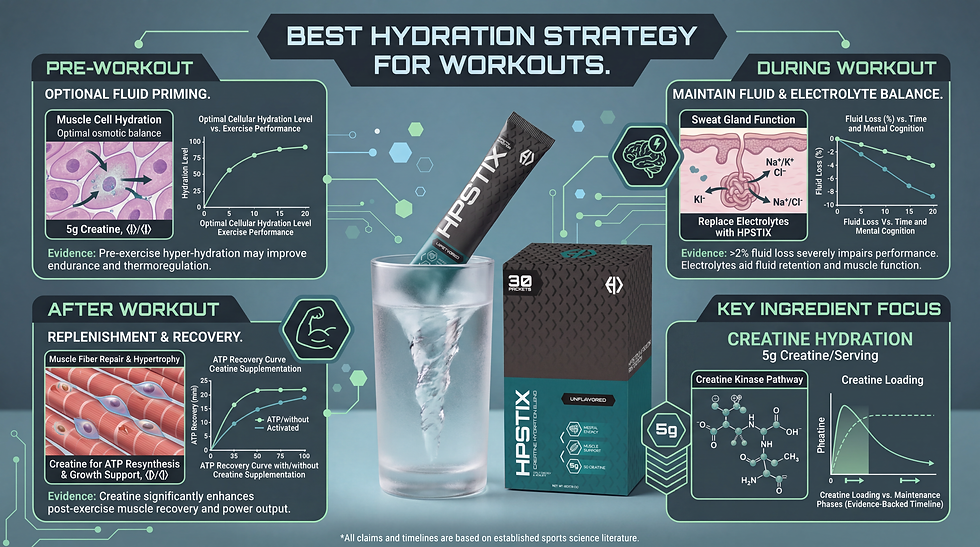
More than just drinking water.
It’s about improving:
fluid absorption,
retention,
and electrolyte balance.
Is designed to support:
workout hydration,
cognitive performance,
endurance,
and recovery.
By combining hydration support with electrolytes and performance-focused ingredients, it creates a more efficient hydration strategy that supports both physical and mental performance demands.
FAQs
What is the best hydration strategy before workouts?
The best strategy begins well before training starts. Consistent hydration throughout the day combined with pre-workout fluid and electrolyte intake helps optimize blood volume, thermoregulation, and exercise readiness.
Should I use electrolytes during workouts?
Electrolytes are especially beneficial during longer workouts, hot environments, and high sweat-loss situations. Sodium helps improve fluid retention and supports muscular and neurological function during exercise.
Can dehydration reduce muscle growth potential?
Indirectly, yes. Dehydration can impair workout quality, recovery, nutrient transport, and overall training performance. Over time, poor hydration habits may negatively affect consistency and lean mass progress.
How can I tell if hydration is affecting my performance?
Common signs include:
unusual fatigue,
headaches,
reduced endurance,
elevated perceived effort,
brain fog,
and slower recovery.
Monitoring urine color and energy levels can provide useful feedback.
Is water alone enough for workout hydration?
Not always. Water is essential, but electrolytes improve fluid absorption and retention, especially during prolonged exercise or high sweat-loss conditions.
RESEARCH BACKED CITATIONS
Sawka, M.N., et al. (2007). Exercise and Fluid Replacement. Medicine & Science in Sports & Exercise.
Shirreffs, S.M., & Sawka, M.N. (2011). Fluid and Electrolyte Needs for Training and Competition. Journal of Sports Sciences.
Casa, D.J., et al. (2019). National Athletic Trainers’ Association Position Statement: Fluid Replacement for Athletes.
Benton, D., & Young, H.A. (2015). Do Small Differences in Hydration Status Affect Mood and Cognitive Function? Nutrition Reviews.
Judelson, D.A., et al. (2007). Hydration and Muscular Performance. Journal of Strength and Conditioning Research.
Human Performance Resource Centerhttps://www.hprc-online.org
International Society of Sports Nutritionhttps://www.jissn.com
American College of Sports Medicinehttps://www.acsm.org


