
Does Creatine Make Your Weiner Smaller? The Truth About Creatine, Testosterone, Penis Size, and Men's Sexual Health
Updated: Oct 8
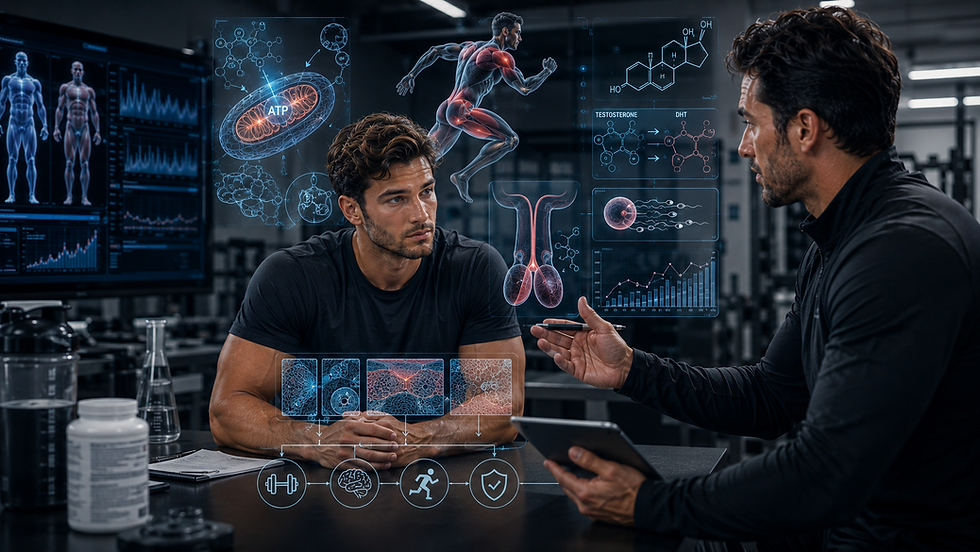
Let's address the elephant in the room. Or perhaps, the elephant some people are worried isn't in the room.
One of the strangest questions I get asked about creatine is, "Does creatine make your weiner smaller?" It usually comes with a laugh, but underneath the humor is a genuine concern.
People aren't actually worried about a supplement magically shrinking anatomy overnight.
They're worried about something deeper:
Does creatine lower testosterone?
Does creatine affect hormones?
Will creatine hurt my libido?
Does creatine cause erectile dysfunction?
Could creatine affect fertility?
Is creatine bad for men's health?
These are legitimate questions. Unfortunately, social media and internet forums are full of misinformation. Some claim creatine ruins testosterone. Others say it increases DHT so much that you'll lose your hair and your sex drive. Some even suggest creatine somehow shrinks the penis.
Here's the good news.
None of those claims are supported by the current body of scientific evidence.
In fact, creatine is one of the most extensively studied sports supplements ever researched. Researchers have investigated its effects on:
Strength
Muscle growth
Recovery
Cognitive performance
Healthy aging
Hormones
Exercise performance
Safety
And despite decades of research, there is no evidence demonstrating that creatine causes the penis to become permanently smaller.
As a Human Performance Expert, I've answered this question more times than I can count. Military members are no different than everyone else. They hear something on TikTok or in the gym. Someone repeats it. Eventually, the myth becomes accepted as fact.
One of the goals of Human Performance HQ is to challenge those myths with evidence instead of opinions.
So, let's talk about what the research actually says.
Quick Answer
Does Creatine Make Your Weiner Smaller?
No. Current scientific evidence does not demonstrate that creatine supplementation shrinks the penis or permanently reduces penis size. Creatine primarily works by increasing phosphocreatine stores in muscle tissue to improve ATP regeneration during high-intensity exercise. It has not been shown to reduce penile tissue, impair sexual anatomy, or decrease testosterone in healthy individuals. If someone notices changes in sexual function, other factors such as stress, sleep, cardiovascular health, medications, hormonal conditions, or psychological factors are far more likely contributors.
Where Did This Myth Come From?
Like many supplement myths, this one didn't begin with strong scientific evidence. Instead, it appears to have evolved from several unrelated misconceptions that gradually became connected online.
People often hear:
Creatine affects hormones.
Hormones affect sexual health.
Therefore creatine must affect penis size.
That's a massive logical leap. The reality is much simpler. Creatine's primary role is improving the body's ability to regenerate adenosine triphosphate (ATP), your body's immediate energy source during short, explosive movements. It has nothing to do with shrinking reproductive organs. Yet once misinformation spreads online, it tends to take on a life of its own.
What Does Creatine Actually Do?

Creatine is naturally produced by:
The liver
The kidneys
The pancreas
It's also found in foods like:
Beef
Fish
Pork
Approximately 95% of creatine is stored inside skeletal muscle.
Its primary job is helping regenerate ATP during activities such as:
Sprinting
Weightlifting
Jumping
Olympic lifting
Football
CrossFit
HYROX
Tactical training
Creatine helps you perform repeated high-intensity efforts more effectively.
That's why organizations like the International Society of Sports Nutrition (ISSN) continue identifying creatine monohydrate as one of the safest and most effective sports supplements available.
Notice what's missing from that list. Nothing about reproductive anatomy.
Does Creatine Affect Testosterone?
This question usually sits underneath the original concern.
Many people assume: Smaller testosterone = smaller penis.
Fortunately, the research doesn't support that premise.
Numerous studies have investigated testosterone responses following creatine supplementation.
Overall, the evidence consistently shows:
No meaningful reductions in total testosterone.
No consistent reductions in free testosterone.
No clinically significant hormonal suppression.
In other words, creatine does not function like anabolic steroids. It doesn't shut down natural hormone production. It doesn't suppress testosterone, its mechanism is completely different.
What About DHT?

Some readers may remember hearing that creatine increases DHT (dihydrotestosterone).
This discussion comes almost entirely from one small 2009 study involving college rugby players.
Researchers observed an increase in DHT after creatine supplementation.
However… Several important points often get ignored. The study:
Included only 20 participants.
Never measured sexual function.
Never measured penis size.
Never measured fertility.
Never measured erectile function.
It simply measured hormone concentrations. Even more importantly, subsequent research has not consistently replicated those findings. That's why major sports nutrition organizations continue concluding that creatine remains both safe and effective.
Does DHT Affect Penis Size?
No. This is another common misunderstanding. DHT plays an important role during fetal development and puberty. During those developmental periods, DHT contributes to male sexual development.
However… Once adult development is complete, temporary fluctuations in DHT do not cause the penis to shrink. Adult anatomy doesn't simply become smaller because hormone levels fluctuate within normal physiological ranges.
The body is considerably more complex than that.
The Ariel Hernandez Perspective
One thing I've noticed in the working in the health and human performance field is that people rarely ask these questions because they're worried about anatomy.
They're worried about confidence, sexual health, relationships, and their masculinity.
That's understandable. Health information online often plays on those fears because fear generates clicks. Whenever someone asks me whether creatine will shrink their penis, I try to redirect the conversation toward what actually matters.
Instead of asking, "Can creatine make me smaller?" I encourage them to ask, "What factors truly influence men's health?" That's a much more productive conversation.
Because if we look at the research, the biggest threats to men's health usually aren't supplements.
They're things like:
Obesity
Physical inactivity
Poor sleep
Chronic stress
Smoking
Excessive alcohol
Cardiovascular disease
Ironically, regular exercise, the very thing creatine helps support, has far stronger evidence for improving overall health than avoiding creatine out of fear.
Penis Size vs. Blood Flow vs. Perception
Another reason this myth persists is because people often confuse:
Penis size
Blood flow
Erectile quality
Temporary appearance
These are not the same thing.
For example: Cold temperatures, anxiety, stress, exercise, swimming, and sympathetic nervous system activation all can temporarily affect appearance. None permanently change anatomy. Likewise, no evidence suggests creatine alters penile tissue.
Does Creatine Affect Erectile Function?
Current research has not demonstrated that creatine causes erectile dysfunction in healthy individuals. In fact, because erectile function depends heavily on: cardiovascular health, blood vessel function, physical fitness, and metabolic health. Maintaining an active lifestyle may be one of the most effective long-term strategies for supporting sexual health.
Creatine doesn't replace healthy habits. It complements them.
What Actually Affects Men's Sexual Health?

If someone is concerned about performance, libido, or erectile quality, the evidence points toward several much more important variables.
Sleep
Poor sleep reduces: testosterone production, recovery, mood, and energy
Body Composition
Higher levels of body fat are associated with increased risk for: metabolic syndrome, cardiovascular disease, and erectile dysfunction.
Physical Activity
Regular exercise supports: blood flow, cardiovascular function, hormonal health, and mental health
Nutrition
Adequate intake of: protein, healthy fats, and micronutrients supports overall health.
Stress
Chronic psychological stress affects: libido, hormones, sleep, and erectile quality far more consistently than creatine supplementation.
Does Creatine Affect Fertility?

Another common concern is fertility. Current evidence does not suggest creatine supplementation impairs male fertility in healthy individuals.
Researchers continue exploring creatine's role in reproductive physiology, but at present there is no evidence that typical creatine supplementation negatively affects sperm production or reproductive function. As always, individuals with fertility concerns should discuss their situation with a qualified healthcare provider rather than relying on internet myths.
10 Facts About Creatine and Men's Health
Creatine does not shrink the penis.
Creatine does not suppress natural testosterone production in healthy individuals.
Current evidence does not show creatine causes erectile dysfunction.
Creatine is one of the most researched sports supplements available.
The supplement primarily supports ATP regeneration during high-intensity exercise.
Adult penis size does not fluctuate because of normal creatine supplementation.
Cardiovascular health has a much greater influence on erectile function than creatine.
Regular exercise supports overall men's health, including sexual health.
Most creatine myths originate from misunderstanding isolated research findings.
Evidence-based decisions should always rely on the total body of scientific literature rather than internet rumors.
The Human Performance HQ Men's Performance Protocol
One of the biggest lessons I've learned as a Human Performance expert is that people often focus on the smallest variables while overlooking the ones that have the greatest impact.
I've had countless conversations with athletes, tactical professionals, executives, and everyday gym-goers who worried about whether creatine would affect their sexual health.
Ironically, many of those same individuals were:
Sleeping five hours per night.
Eating highly processed diets.
Rarely exercising outside the gym.
Chronically stressed.
Drinking excessive amounts of alcohol.
Neglecting cardiovascular health.
The reality is that overall lifestyle has a dramatically greater influence on men's sexual health than creatine supplementation.
If your goal is to optimize performance, not just in the gym, but in every aspect of life, I recommend following what I call the Human Performance HQ Men's Performance Protocol.
Step 1 — Prioritize Your Cardiovascular Health
One of the biggest misconceptions about men's sexual health is that it's purely hormonal. In reality, erectile function is heavily dependent on cardiovascular health.
An erection requires:
Healthy blood vessels
Healthy circulation
Proper endothelial function
Adequate nitric oxide production
In many cases, erectile dysfunction can actually be an early warning sign of cardiovascular disease. That means improving your: aerobic fitness, blood pressure, body composition, and metabolic health may have a much greater impact on sexual health than worrying about one supplement. Ironically, the same exercise habits that improve Human Performance often improve sexual health as well.
Step 2 — Lift Weights Consistently
Resistance training remains one of the most effective ways to improve:
Muscle mass
Strength
Insulin sensitivity
Confidence
Functional capacity
Regular exercise is also associated with healthier testosterone levels and improved overall well-being. Creatine simply helps support higher-quality training sessions. It doesn't replace them.
Step 3 — Protect Your Sleep
Sleep is where recovery happens. Poor sleep has been associated with:
Lower testosterone
Reduced libido
Increased stress hormones
Poor recovery
Reduced exercise performance
One of the best "performance supplements" available is consistently sleeping seven to nine hours each night.
Step 4 — Eat Like Your Health Depends On It
Because it does. A diet emphasizing lean protein, fruits, vegetables, healthy fats, and whole grains supports hormonal health, recovery, body composition, and cardiovascular function
No supplement can consistently overcome poor nutrition.
Step 5 — Manage Stress
Stress affects nearly every aspect of Human Performance. Chronic psychological stress can negatively influence:
Libido
Erectile quality
Sleep
Mood
Exercise recovery
Motivation
Managing stress isn't simply about feeling better. It's about performing better.
Step 6 — Use Evidence-Based Supplements
This is where creatine fits. Supplements should enhance an already solid foundation, not compensate for missing fundamentals.
Among all sports supplements available today, creatine monohydrate remains one of the most extensively researched for improving:
Strength
Power
Lean muscle
Recovery
High-intensity exercise performance
Current evidence does not support the claim that creatine shrinks the penis or negatively affects men's sexual anatomy.
What Actually Influences Penis Size?
One reason this myth spreads so easily is because people often confuse temporary changes in appearance with actual anatomical changes.
Adult penile size is determined primarily by:
Genetics
Development during puberty
Hormonal exposure during fetal development and adolescence
Once those developmental stages are complete, creatine supplementation has not been shown to reduce penile tissue or permanently alter penis size.
Temporary changes in appearance are much more commonly influenced by factors such as:
Cold temperatures
Stress
Anxiety
Physical activity
Blood flow
Sympathetic nervous system activation
These changes are temporary and should not be confused with permanent anatomical changes.
Creatine and Erectile Function
Some people searching for this topic are actually asking a different question, "Will creatine hurt my sexual performance?"
Current research does not support that conclusion. In fact, creatine's primary role is improving cellular energy availability through phosphocreatine regeneration. There is no established mechanism by which creatine would directly impair erectile function in healthy individuals.
On the other hand, many factors that are known to negatively affect erectile function include:
Smoking
Obesity
Physical inactivity
Hypertension
Diabetes
Chronic stress
Poor sleep
Cardiovascular disease
As a Human Performance expert, I encourage people to focus on these evidence-based risk factors before worrying about creatine.
Creatine, Fertility, and Reproductive Health
Another concern I occasionally hear is whether creatine affects fertility. Current scientific evidence has not demonstrated that creatine supplementation negatively affects male fertility in healthy individuals.
Researchers continue exploring creatine's role in reproductive physiology, but at this time there is no compelling evidence suggesting that standard creatine supplementation reduces sperm production, impairs reproductive hormones, or negatively affects fertility.
Anyone experiencing fertility concerns should work with a qualified healthcare professional to identify potential medical causes rather than assuming a supplement is responsible.
Confidence Matters More Than Myths
One thing I've learned over years of working in Human Performance is that confidence often influences performance more than people realize. If someone believes a supplement is harming them, even without evidence, they may begin paying close attention to every normal variation in their body.
This is sometimes referred to as the nocebo effect, where negative expectations contribute to perceived negative outcomes. That's one reason I encourage people to evaluate health information carefully. The internet rewards sensational headlines. Science rewards careful investigation.
The Bigger Picture
If there's one lesson I hope readers take away from this article, it's this:
Don't let internet myths prevent you from benefiting from evidence-based nutrition.
Current scientific evidence does not demonstrate that creatine makes your penis smaller. The concern appears to have grown from misunderstandings surrounding hormones, DHT, and isolated research findings rather than the total body of evidence.
As a Human Performance expert, I believe the better question isn't, "Can creatine shrink my penis?" It's, "What habits will improve my health, confidence, performance, and quality of life over the next 30 years?"
Those habits include:
Exercising consistently.
Sleeping well.
Managing stress.
Eating a nutritious diet.
Staying hydrated.
Building lean muscle.
Maintaining cardiovascular fitness.
Those are the factors most likely to influence your long-term health, not fear of one of the safest sports supplements ever studied.
FAQs
Does creatine make your weiner smaller?
No. Current scientific evidence does not demonstrate that creatine supplementation shrinks the penis or permanently changes penile anatomy. Creatine primarily supports ATP regeneration within skeletal muscle and has no established mechanism for reducing adult penile size. If you notice changes in sexual health, factors like cardiovascular health, stress, sleep, medications, or underlying medical conditions are much more likely explanations.
Does creatine lower testosterone?
Current research consistently shows that creatine does not meaningfully reduce testosterone levels in healthy individuals. Unlike anabolic steroids, creatine does not suppress the body's natural hormone production. Its primary role is improving energy availability during high-intensity exercise, not altering endocrine function.
Can creatine cause erectile dysfunction?
There is currently no scientific evidence demonstrating that creatine causes erectile dysfunction in healthy men. Erectile function depends heavily on cardiovascular health, blood flow, metabolic health, sleep quality, and psychological well-being. Regular exercise and healthy lifestyle habits have far greater influence on sexual performance than creatine supplementation.
Does creatine affect fertility?
Current evidence does not suggest that creatine negatively affects male fertility when consumed at recommended doses. Research has not demonstrated reductions in sperm production or reproductive function related to creatine supplementation. Individuals with fertility concerns should consult a healthcare provider for personalized evaluation.
Does creatine increase DHT?
One small 2009 study observed an increase in DHT following creatine supplementation, but subsequent research has not consistently replicated that finding. More importantly, the original study did not measure sexual function, fertility, or penis size. Current evidence remains insufficient to conclude that creatine meaningfully alters DHT in a way that produces adverse clinical outcomes.
Is creatine safe for long-term use?
Yes. Creatine monohydrate is one of the most extensively researched supplements in sports nutrition. Position stands from organizations like the International Society of Sports Nutrition conclude that creatine is safe for healthy individuals when consumed at recommended doses. Long-term research continues to support its favorable safety profile.
What actually improves men's sexual health?
The strongest evidence points toward consistent lifestyle habits. Maintaining cardiovascular fitness, resistance training, healthy body composition, quality sleep, stress management, and a balanced diet all contribute to better overall health and sexual function. Supplements should complement these fundamentals, not replace them.
Key Takeaways
Current evidence does not demonstrate that creatine shrinks the penis.
Creatine does not suppress testosterone production in healthy individuals.
There is no established evidence linking creatine to erectile dysfunction or reduced fertility.
Most concerns originate from internet myths rather than high-quality clinical research.
Cardiovascular health, sleep, nutrition, stress management, and exercise have a much greater influence on men's sexual health than creatine.
Evidence-based decisions should always rely on the total body of scientific literature rather than isolated headlines.
Continue Learning at Human Performance HQ
Continue exploring our evidence-based creatine resources:
Join the Human Performance HQ Community
Subscribe to the Human Performance HQ Newsletter for evidence-based insights on creatine, hydration, recovery, nutrition, longevity, tactical fitness, and Human Performance.
PERFORM | EVOLVE | ACHIEVE
RESEARCH BACKED CITATIONS
Creatine Research
International Society of Sports Nutrition Position Stand: Creatine Supplementation and Exercise (2025 Update) https://jissn.biomedcentral.com/articles/10.1186/s12970-025-00679-z
Kreider RB, Kalman DS, Antonio J, et al. (2017). International Society of Sports Nutrition Position Stand: Safety and Efficacy of Creatine Supplementation in Exercise, Sport, and Medicine. https://jissn.biomedcentral.com/articles/10.1186/s12970-017-0173-z
Antonio J, Candow DG, Forbes SC, et al. (2021). Common Questions and Misconceptions About Creatine Supplementation. https://jissn.biomedcentral.com/articles/10.1186/s12970-021-00412-w
Men's Health
American Urological Association (AUA) https://www.auanet.org/
American Society for Reproductive Medicine (ASRM) https://www.asrm.org/
National Institute of Diabetes and Digestive and Kidney Diseases (NIDDK) – Erectile Dysfunction https://www.niddk.nih.gov/health-information/urologic-diseases/erectile-dysfunction
European Association of Urology (EAU) Guidelines https://uroweb.org/guidelines


