
How Long Does Creatine Stay In Your System? The Complete Guide to Creatine Retention, Elimination, and Muscle Saturation
Updated: Oct 8
One of the most common questions people ask after starting creatine supplementation is:
"How long does creatine stay in your system?"
The answer depends on what you mean by "in your system."
Are you asking:
How long creatine stays in your muscles?
How long creatine stays in your bloodstream?
How long it takes creatine to leave the body?
How long the performance benefits last after stopping?
Whether creatine shows up on drug tests?
These are all slightly different questions with different answers.
The short answer is that creatine can remain elevated in muscle tissue for several weeks after supplementation stops, while excess creatine in the bloodstream may be cleared much more quickly.
However, understanding how creatine is stored, utilized, and eliminated provides a much clearer picture.
As someone who has used creatine for year in coaching military and tactical populations, endurance sports, strength training, I've noticed that many people misunderstand how creatine works.
Unlike caffeine, creatine does not create an immediate effect and then disappear.
Instead, it functions more like filling a fuel tank.
Once the tank is full, benefits continue even if supplementation stops for a short period.
In this article you'll learn:
How long creatine stays in your muscles
How long creatine remains in your blood
What happens when you stop taking creatine
How quickly muscle stores decline
Whether creatine shows up on drug tests
Factors influencing creatine elimination
How to maintain optimal creatine levels
Let's dive into the science.
What Is Creatine?
Creatine is a naturally occurring compound synthesized from three amino acids:
Arginine
Glycine
Methionine
Your body naturally produces approximately: 1–2 grams per day
primarily in the:
Liver
Kidneys
Pancreas
You also obtain creatine from foods such as:
Beef
Pork
Fish
Poultry
Approximately 95% of total body creatine is stored within skeletal muscle.
The remaining 5% is distributed throughout:
Brain tissue
Heart tissue
Other organs
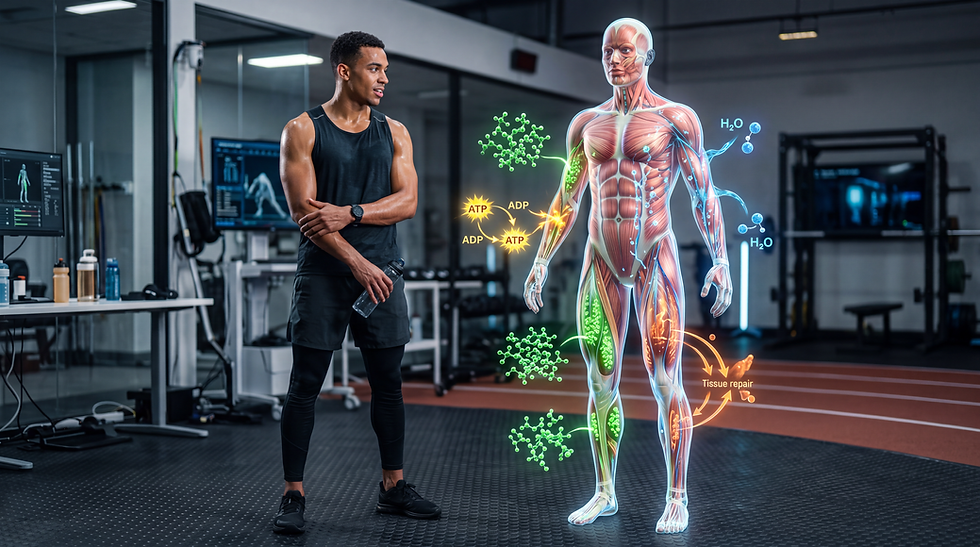
Creatine helps regenerate ATP, the body's primary energy currency.
This is why creatine supplementation consistently improves:
Strength
Power
Sprint performance
Recovery
Lean mass development
Cognitive performance
For a deeper explanation, check out What Does Micronized Creatine Mean?
What Does "Staying In Your System" Actually Mean?
This phrase often causes confusion. There are several ways scientists measure creatine presence:
Blood Creatine Levels
Creatine enters circulation after ingestion.
Muscle Creatine Stores
Most supplemented creatine ultimately becomes stored within muscle tissue.
Urinary Excretion
Unused creatine and creatinine are eliminated through urine.
Physiological Effects
Performance benefits can persist even after supplementation stops. Each measurement produces a different timeline.
How Long Does Creatine Stay In Your Bloodstream?
Creatine enters circulation relatively quickly after ingestion.
Research suggests blood creatine concentrations typically peak:
Approximately 1–2 hours after ingestion
After this peak:
Muscles absorb creatine
Tissues utilize creatine
Excess amounts are excreted
Blood levels return toward baseline relatively quickly compared to muscle storage.
This is why measuring blood creatine alone doesn't provide an accurate picture of total creatine status.
The more important metric is Muscle saturation.
How Long Does Creatine Stay In Muscle Tissue?

This is where things get interesting. When creatine supplementation occurs consistently, muscle stores gradually increase.
Typical muscle saturation timelines include:
Loading Phase
20 grams daily For 5–7 days, resulting in rapid saturation.
Standard Protocol
3–5 grams daily, resulting in full saturation typically achieved within 3–4 weeks.
Once saturation occurs, elevated muscle creatine levels can remain for weeks after supplementation stops.
Research suggests muscle stores gradually decline over approximately 4–6 weeks following discontinuation. This means creatine benefits do not disappear overnight.
What Happens When You Stop Taking Creatine?
Many people assume stopping creatine immediately eliminates all benefits.
That's not how it works.
When supplementation ends:
Week 1
Muscle creatine remains highly elevated. Performance changes are generally minimal.
Week 2
Muscle stores begin declining slowly. Most individuals still maintain elevated levels.
Week 3–4
Creatine stores continue decreasing. Some benefits remain.
Week 4–6
Levels approach baseline. Performance differences may become more noticeable.
The exact timeline varies depending on:
Muscle mass
Initial saturation level
Diet
Training volume
Individual physiology
Does Creatine Leave the Body Through Urine?
Yes.
Creatine undergoes conversion into:
Creatinine
Creatinine is a waste product excreted through urine.
Every day, approximately 1–2% of stored creatine is naturally degraded into creatinine.
This natural turnover explains why continued supplementation helps maintain elevated muscle stores. Without supplementation, gradual depletion occurs.
Factors That Influence How Long Creatine Stays In Your System
Not everyone processes creatine identically.
Several factors influence retention.
1. Muscle Mass
Individuals with greater muscle mass generally store more creatine. More storage capacity often means:
Greater total retention
Longer depletion timelines
2. Supplementation Duration
Someone supplementing for 6 months will likely have more saturated stores than someone supplementing for 7 days. Longer supplementation generally supports greater retention.
3. Diet
Dietary creatine intake matters. Individuals consuming red meat, fish, and animal proteins continue receiving creatine even after supplementation stops. Vegetarians and vegans may experience faster declines.
4. Exercise Habits
High-intensity training increases creatine utilization. Athletes often cycle through muscle phosphocreatine stores more rapidly than sedentary individuals.
5. Age
Research suggests older adults may have different creatine metabolism patterns compared to younger populations. This is one reason creatine is increasingly studied for healthy aging.
Ariel Hernandez’s Perspective on how long creatine stays in your system
One mistake I frequently see among athletes and tactical populations is treating creatine like caffeine.
People often ask, "Will I lose all my gains if I miss a few days?"
The answer is almost always, No.
Creatine works through saturation. Think of it like filling a swimming pool. Missing one bucket of water doesn't suddenly empty the pool.
Similarly, missing a few doses doesn't suddenly erase your creatine stores. This is why consistency matters more than perfection.
I've personally missed supplementation during:
Travel
Deployments
Field exercises
Vacations
and noticed little difference over short periods. Long-term consistency matters. Short-term perfection does not.
Does Creatine Show Up On Drug Tests?
This question is common among:
Military personnel
Athletes
First responders
The answer is, No.
Creatine is:
Legal
Naturally occurring
Widely researched
Creatine is not prohibited by:
NCAA
IOC
WADA
U.S. Military
Standard drug testing panels do not test for creatine supplementation.
How Long Do Creatine Benefits Last?

This is arguably the most important question. Even after supplementation stops.
Benefits may persist temporarily because muscle stores remain elevated.
Commonly retained benefits include:
Improved strength
Muscle fullness
Enhanced recovery
Increased intracellular hydration
Eventually, as stores decline, benefits gradually diminish. This process usually takes weeks rather than days.
10 Signs Your Muscle Creatine Stores Are Still Elevated
Workouts still feel strong.
Recovery remains efficient.
Muscles appear fuller.
Body weight remains stable.
Training volume remains elevated.
Sprint performance stays high.
Strength levels remain unchanged.
Energy during workouts remains strong.
Muscle pumps remain noticeable.
Lean mass remains stable.
These indicators often persist for several weeks following discontinuation.
Can You Flush Creatine Out Faster?
Many people search for ways to "flush creatine out" before:
Weight-class competitions
Physique events
Travel
Medical testing
The reality is that creatine depletion primarily depends on natural turnover.
While hydration status affects body water, it does not instantly eliminate stored muscle creatine.
The Human Performance HQ Creatine Retention Protocol
One thing I've learned from years of using creatine personally and working with thousands of clients is that people tend to overcomplicate supplementation.
They worry about:
Missing a serving
Taking creatine at the wrong time
Running out during a trip
Whether they'll lose all their progress
Meanwhile, they ignore the things that actually matter:
Sleep
Hydration
Training consistency
Recovery
Nutrition
That's why I recommend what I call the
C.R.E.A.T.E. Protocol.
C – Consistency Over Perfection
If you've been taking creatine consistently for weeks or months, missing a day or two is not a big deal. Your muscle stores don't suddenly disappear.
Think long-term.
R – Reach Saturation First
The biggest goal is reaching muscle saturation.
This typically occurs through:
3–5 grams daily for 3–4 weeks
Or a loading phase
Once saturated, benefits become easier to maintain.
E – Evaluate Performance
Rather than obsessing over supplementation timing, monitor:
Strength
Recovery
Energy
Workout quality
Performance tells a much better story than scale weight or supplement timing.
A – Avoid Supplement Hopping
Many people stop and restart creatine repeatedly. This creates unnecessary fluctuations. Long-term consistency almost always wins.
T – Track the Fundamentals
Focus on:
Sleep quality
Hydration
Protein intake
Training consistency
These variables have a much larger impact on results.
E – Embrace the Long Game
Creatine is not a quick fix. It is a foundational performance supplement. Think months and years rather than days and weeks.
What Is Creatine's Half-Life?
You may have heard the term:
Half-Life
A half-life refers to the time required for half of a substance to leave circulation.
The challenge with creatine is that the concept isn't particularly useful for practical supplementation.
Why? Because creatine is stored.
What matters isn't blood concentration.
What matters is:
Muscle Creatine Saturation
Your muscles function like a storage tank. Even when blood levels decline, muscle stores remain elevated. This is why creatine benefits continue long after a single serving has been absorbed.
Does Creatine Water Weight Go Away?
Yes.
This is another extremely common question. When creatine supplementation stops:
Muscle creatine stores decline
Intracellular water retention decreases
Body weight may decrease slightly
Most people notice 1–5 pounds of water weight loss depending on:
Muscle mass
Supplementation history
Hydration status
This is not muscle loss, and it is not fat loss. It's simply a reduction in muscle cell hydration.
For a deeper explanation, see Does Creatine Water Weight Go Away?
Can You Flush Creatine Out Faster?
Technically, not very effectively. This is one of the biggest misconceptions surrounding creatine.
Many athletes assume they can:
Drink excessive water
Sweat more
Use saunas
Increase cardio
to eliminate creatine rapidly.
However, muscle creatine depletion primarily depends on natural physiological turnover. Once stored inside muscle tissue, creatine gradually declines over time.
There is no reliable shortcut.
Do You Need to Cycle Creatine?

For most people, No.
Current evidence does not support the need for cycling creatine. Research consistently demonstrates safety and efficacy with long-term use. Many individuals successfully supplement year-round.
This includes:
Athletes
Military personnel
Women
Older adults
Recreational exercisers
Personally, I've never found a compelling performance reason to cycle creatine. The benefits are most noticeable when stores remain saturated.
Does Creatine Build Up Forever?
No. The body naturally regulates creatine storage.
Once muscles become saturated:
Additional creatine provides diminishing returns
Excess amounts are excreted
This is why taking 30 grams daily indefinitely doesn't produce dramatically greater benefits than 3–5 grams daily for most individuals. Unless we are looking at higher dosages for cognitive performance, that is a topic for another article.
More isn't always better. Consistency is.
Ariel Hernandez's Perspective
One thing I've noticed over years of working in human performance is that people often treat supplements as if they're magic.
They're not. Creatine works incredibly well, but it works best when it supports a larger performance system.
When I was deployed, traveling, competing, or working long military schedules, there were plenty of times when supplementation wasn't perfect.
Some days I missed creatine entirely. What mattered wasn't perfection. What mattered was that I had spent months consistently saturating muscle stores beforehand.
This is something I emphasize to my clients all the time. Don't let supplement anxiety distract you from the fundamentals. A missed serving isn't what ruins performance.
Poor sleep, chronic stress, dehydration, and inconsistent training are far more impactful.
The people who get the most out of creatine are usually the people who focus on the basics first.
Where HPSTIX Fits Into the Conversation
One thing that often gets overlooked in the creatine conversation is hydration.Creatine works partly by increasing intracellular water storage.
In simple terms creatine helps pull water into muscle cells. That's one reason many people notice:
Fuller muscles
Better pumps
Improved recovery
But if hydration isn't adequate, you're limiting the effectiveness of supplementation. This is one reason Human Performance HQ emphasizes a complete performance system.
Products like HPSTIX are designed around the idea that:
Hydration matters
Electrolytes matter
Recovery matters
Consistency matters
Creatine doesn't work in isolation.
The best results occur when hydration, recovery, nutrition, and training all work together.
FAQs
How long does creatine stay in your system after you stop taking it?
Creatine can remain elevated within muscle tissue for approximately four to six weeks after supplementation stops. While blood levels decline much faster, muscle stores gradually decrease over time. This is why performance benefits often persist for several weeks after discontinuation.
How long does creatine stay in your muscles?
Research suggests muscle creatine stores remain elevated for roughly one month or longer after supplementation ends. The exact timeline depends on factors such as muscle mass, training status, diet, and supplementation history.
Will I lose my gains if I stop taking creatine?
Not immediately. Any strength or muscle built through training remains. What you may notice over time is a reduction in muscle fullness and intracellular water retention as creatine stores gradually return to baseline.
How long does creatine stay in your urine?
Creatine and its byproduct creatinine are continuously excreted through urine. However, urinary elimination does not mean muscle stores have been depleted. Muscle saturation can remain elevated even while creatine is being excreted.
Can I skip creatine for a few days?
Yes. Missing a few days is unlikely to have a meaningful impact if your muscles are already saturated. This is one reason creatine is considered a forgiving supplement compared to many performance-enhancing compounds.
Does creatine show up on a drug test?
No. Creatine is a naturally occurring compound and is not prohibited by organizations such as WADA, NCAA, or the U.S. military. Standard drug tests do not screen for creatine supplementation.
How long do creatine benefits last after stopping?
Benefits gradually decline as muscle stores decrease. Many people continue experiencing improved performance and recovery for several weeks after discontinuing supplementation.
Key Takeaways
If you remember nothing else from this article, remember these points:
Creatine does not leave your system overnight.
Muscle stores typically remain elevated for 4–6 weeks after supplementation stops.
Missing a few doses will not erase your progress.
Creatine works through saturation, not immediate stimulation.
Long-term consistency matters more than perfect timing.
Most performance benefits gradually decline rather than disappearing suddenly.
Hydration, recovery, and training remain more important than supplementation details.
Continue Optimizing Your Performance
Explore more Human Performance HQ articles:
Join the Human Performance HQ Newsletter
Want science-backed insights on creatine, hydration, recovery, sleep, performance, and healthy aging?
Join the Human Performance HQ newsletter at the bottom of this page and receive practical strategies, new research breakdowns, and performance optimization tools delivered directly to your inbox.
PERFORM | EVOLVE | ACHIEVE
RESEARCH BACKED CITATIONS
Kreider, R. B., Kalman, D. S., Antonio, J., et al. (2017). International Society of Sports Nutrition Position Stand: Safety and efficacy of creatine supplementation in exercise, sport, and medicine. Journal of the International Society of Sports Nutrition, 14(18). https://jissn.biomedcentral.com/articles/10.1186/s12970-017-0173-z
Antonio, J., Candow, D. G., Forbes, S. C., et al. (2021). Common questions and misconceptions about creatine supplementation. Journal of the International Society of Sports Nutrition, 18(13). https://jissn.biomedcentral.com/articles/10.1186/s12970-021-00412-w
Rawson, E. S., & Persky, A. M. (2007). Mechanisms of muscular adaptations to creatine supplementation. International SportMed Journal, 8(2), 43–53. https://pubmed.ncbi.nlm.nih.gov/18184753/
Buford, T. W., Kreider, R. B., Stout, J. R., et al. (2007). International Society of Sports Nutrition Position Stand: Creatine Supplementation and Exercise. Journal of the International Society of Sports Nutrition, 4(6). https://jissn.biomedcentral.com/articles/10.1186/1550-2783-4-6
Forbes, S. C., Candow, D. G., Ostojic, S. M., Roberts, M. D., & Chilibeck, P. D. (2022). Creatine supplementation and adaptations to exercise training. Nutrients, 14(5), 921. https://www.mdpi.com/2072-6643/14/5/921


