
No Bloat Creatine for Women
Updated: Oct 8

Looking for a No Bloat Creatine for Women? Here's What the Science Actually Says
If you've spent any time researching creatine online, you've probably seen comments like: "Creatine made me puffy.", or "I gained five pounds in a week.", or "I don't want to look bloated."
For many women, these concerns become the biggest reason they avoid taking one of the most researched supplements in sports nutrition.
Ironically, the fear of bloating often causes women to miss out on benefits that extend far beyond the gym.
Today, research suggests creatine may support:
Lean muscle maintenance
Exercise recovery
Strength
Brain health
Healthy aging
Perimenopause
Menopause
Overall physical performance
That's a very different conversation than the one most people were having ten years ago.
As someone who works in human performance every day, I've noticed one consistent trend.
Most people don't actually understand what "creatine bloat" is.
They assume: Water retention = bloating. But physiologically, those are two completely different things. Understanding that distinction changes everything.
The good news?
Most women do not need a special "women's creatine."
They need accurate information.
This article will explain:
Why creatine sometimes causes temporary water weight
Whether women experience bloating differently than men
How to minimize water retention
Whether micronized creatine makes a difference
Which creatine is best for women
How hydration influences results
Let's separate marketing from science.
The Short Answer
If you're looking for the quick answer:
Is there a no bloat creatine for women?
Not exactly.
There isn't a specific type of creatine that's completely free of water retention.
However…
Most women can minimize temporary water weight by:
Using creatine monohydrate
Taking 3–5 grams daily
Skipping the loading phase
Staying well hydrated
Maintaining adequate electrolyte intake
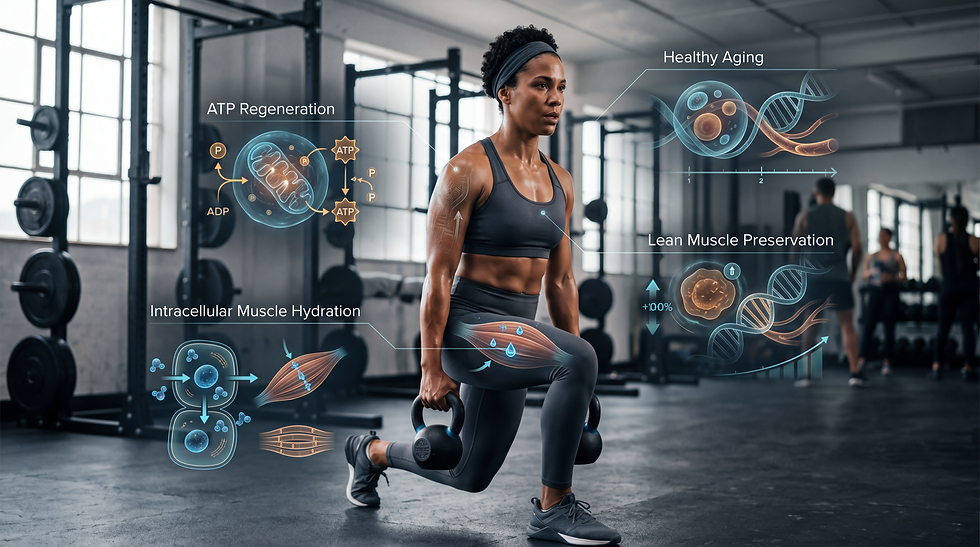
More importantly, what many people call "bloating" is actually: Healthy intracellular muscle hydration.
That's a good thing.
Why Women Worry About Creatine More Than Men
This is something I've noticed repeatedly over the years.
Men often ask: "Will creatine make me stronger?"
Women are much more likely to ask: "Will creatine make me look bloated?"
That difference matters.
Many women aren't avoiding creatine because they're worried about safety.
They're worried about appearance.
Unfortunately, social media has amplified this concern by spreading images and anecdotes that often lack context.
The reality is much more nuanced.
Most of the water associated with creatine is stored: Inside muscle cells. Not underneath the skin. Not around the face. Not as body fat. Research consistently supports this distinction (Kreider et al., 2017).
What Creatine Actually Does

To understand why bloating concerns are often exaggerated, it's helpful to understand how creatine works.
Creatine is a naturally occurring compound synthesized from:
Arginine
Glycine
Methionine
Your body naturally produces: Approximately 1–2 grams daily.
You also obtain creatine from foods including:
Beef
Fish
Pork
Once inside skeletal muscle, creatine helps regenerate ATP. ATP is your body's immediate source of energy during muscular contractions.
Creatine also functions as an: Osmolyte, meaning it naturally attracts water.
This water moves: Into muscle cells.
Researchers believe this increase in intracellular hydration contributes to:
Improved muscle function
Better recovery
Enhanced exercise adaptations
Greater training capacity
This process is called: Cell volumization, it's one of the primary reasons creatine works so well.
The Ariel Hernandez Perspective: Why I Think Women Have Been Misled
One thing I've learned in human performance is that context matters.
I've had conversations with countless women who tell me, "I've heard creatine makes women puffy."
When I ask, "Where did you hear that?"
The answer is almost always:
Instagram
TikTok
Facebook
Someone at the gym
Rarely is it based on research.
The problem is that a temporary increase in intracellular water gets interpreted as, "I look worse." When in reality, it's often a sign that creatine is doing exactly what it's supposed to do.
Personally, I've taken creatine through:
Strength phases
Running training
Cycling
Military deployments
Tactical fitness
Every time I restart creatine after taking a break, I expect to gain a couple of pounds.
I don't panic, because I understand what's happening physiologically. That's the perspective I want more women to have.
Knowledge removes unnecessary fear.
Does Creatine Actually Cause Bloating?
The answer depends on what you mean by bloating.
If you mean digestive bloating…
Large doses of creatine taken all at once may occasionally cause stomach discomfort.
This is one reason I rarely recommend loading phases.
Splitting doses, or simply taking 3–5 grams daily, usually minimizes gastrointestinal symptoms.
If you mean water retention…
Yes. Creatine increases intracellular water.
That's part of how it works. But that's very different from the type of bloating associated with:
High sodium meals
Hormonal fluctuations
Digestive issues
Those are separate physiological processes.
Does Micronized Creatine Reduce Bloating?
This is another popular question.
Micronized creatine has simply been processed into smaller particles.
This may improve:
Mixability
Solubility
Digestive comfort
However, research does not suggest micronized creatine eliminates intracellular water retention.
If you're interested in learning more, read What Does Micronized Creatine Mean?
Why Skipping the Loading Phase Helps
Traditional creatine loading involves taking: 20 grams daily for approximately 5–7 days. This rapidly saturates muscle creatine stores, and it also increases water uptake more quickly.
For many women, that's unnecessary.
Instead, I typically recommend: 3–5 grams daily. You'll achieve similar muscle saturation over several weeks with:
Smaller changes in body weight
Less digestive discomfort
Better long-term adherence
Sometimes slower really is better.
Creatine During Perimenopause and Menopause

This is where the conversation becomes especially interesting.
Emerging research suggests women may benefit from creatine during:
Perimenopause
Menopause
Post-menopause
Potential benefits include support for:
Lean muscle preservation
Strength
Physical function
Recovery
Cognitive health
Interestingly, many women entering these life stages are also more concerned about body composition.
That's why understanding the difference between healthy muscle hydration and unwanted bloating becomes even more important.
For more, see:
Does Creatine Cause Face Bloating?
Probably less often than social media suggests.
Controlled research has not demonstrated widespread facial puffiness associated with creatine supplementation.
If someone notices temporary facial fullness, other factors often deserve consideration, including:
Sleep quality
Alcohol intake
Menstrual cycle
Sodium intake
Allergies
Stress
Rather than assuming creatine is solely responsible.
For a deeper explanation, read Does Creatine Cause Face Bloating?
10 Myths About Creatine and Women
Creatine makes women bulky.
Creatine causes fat gain.
Creatine always causes bloating.
Women need a special creatine formula.
Micronized creatine eliminates water retention.
Creatine causes hormonal imbalances.
Creatine isn't safe during perimenopause.
Creatine is only for bodybuilders.
Women shouldn't take creatine after 40.
Water weight means the supplement isn't working.
Every one of these myths is either exaggerated or unsupported by current evidence.
The Bigger Picture
One thing I hope every woman takes away from this article is this:
Don't let fear of temporary water weight prevent you from experiencing the long-term benefits of a supplement that's been studied for decades.
Creatine isn't about looking bigger, it's about supporting:
Performance
Recovery
Healthy aging
Strength
Long-term physical capability
The Human Performance HQ No-Bloat Women's Protocol
One of the biggest shifts I'd like to see in women's health is moving away from asking, "How do I avoid every ounce of water retention?" and instead asking, "How do I optimize my body composition and long-term health?"
Those are two very different goals. A small increase in intracellular water is not something to fear. In fact, it's one of the reasons creatine works so well.
That's why I recommend following what I call the:
N.O. B.L.O.A.T. Protocol
N – Normalize Temporary Water Weight
The first thing to understand is that temporary water weight is normal.
Most women who notice a change typically experience:
1–3 pounds
Primarily during the first one to two weeks
Mostly inside skeletal muscle
That isn't body fat. It isn't inflammation, and for most women, it stabilizes quickly.
O – Optimize Hydration
Ironically, one of the best ways to reduce the feeling of bloating is to drink enough water.
When hydration is inconsistent, your body becomes less efficient at regulating fluid balance.
Aim to:
Drink consistently throughout the day.
Replace electrolytes after long workouts.
Increase fluids during hot weather.
Hydration supports both creatine function and overall recovery.
B – Build Creatine Stores Gradually
This is one recommendation I make frequently.
Skip the loading phase.
Instead, simply take: 3–5 grams of creatine monohydrate daily.
You'll reach full muscle saturation within approximately three to four weeks while reducing the likelihood of:
Digestive discomfort
Rapid water weight changes
Feeling unnecessarily "puffy"
L – Lift Regularly
Creatine works best when paired with resistance training.
Strength training helps direct those cellular adaptations toward:
Greater strength
Lean muscle preservation
Improved body composition
Exercise gives creatine a purpose.
O – Observe Progress Beyond the Scale
One of the biggest mistakes I see is weighing yourself every morning and allowing that number to determine whether creatine is "working."
Instead, ask:
Am I getting stronger?
Do my workouts feel better?
Am I recovering faster?
Do I feel more energetic?
Those answers matter much more than two pounds of water.
A – Avoid Marketing Gimmicks
You'll see countless products marketed as:
Women's creatine
No-bloat creatine
Lean creatine
Beauty creatine
The reality?
The overwhelming majority rely on the exact same active ingredient: Creatine monohydrate.
The marketing changes. The science doesn't.
T – Think Long-Term
Creatine isn't a seven-day transformation.
It's a supplement designed to support:
Years of training
Healthy aging
Muscle preservation
Long-term performance
Think in months and years, not days.
What's the Best Creatine for Women?
This is one of the easiest questions to answer.
For most healthy women: Creatine monohydrate. It remains:
The most researched.
The most effective.
The most affordable.
The form used in the overwhelming majority of clinical trials.
Fancy versions often cost more without demonstrating superior outcomes.
Should Women Over 40 Take Creatine?
I actually think this is one of the populations that stands to benefit the most.
After age 40, many women begin experiencing gradual changes in:
Muscle mass
Recovery
Bone health
Physical function
Current evidence suggests creatine may help support many of these areas when combined with resistance training (Candow et al., 2021).
That's why the conversation has shifted from, "Is creatine only for athletes?" to "Could creatine become part of healthy aging?"
Personally, I think that's one of the most exciting developments in sports nutrition.
Does Creatine Cause Belly Fat?
No. Creatine does not directly increase body fat.
If the scale increases shortly after beginning supplementation, the explanation is usually:
Increased intracellular muscle hydration.
Body fat changes occur when calorie intake consistently exceeds calorie expenditure.
Those are separate physiological processes.
For more information, see Does Creatine Make You Gain Belly Fat?
Should Women Cycle Creatine?
Current evidence suggests:
No.
There is no established physiological reason that healthy individuals need to cycle creatine. Instead, take it consistently. Allow muscle creatine stores to remain elevated. This is how most long-term research has been conducted.
The Ariel Hernandez Perspective
One thing I've learned over the years is that women often carry an unfair amount of pressure when it comes to appearance.
A two-pound increase on the scale can feel emotionally significant, even when it's simply healthy muscle hydration.
That's unfortunate, because I've watched so many women work incredibly hard to become:
Stronger.
Healthier.
More resilient.
Only to second-guess themselves because of temporary water weight.
I'd rather see women focus on questions like:
Am I stronger than last month?
Can I carry my kids more easily?
Do I recover better?
Do I feel more confident in my body?
Those are real indicators of progress. When I think about human performance, I don't think about looking perfect for one vacation. I think about building a body that serves you for the next forty years.
That's why I believe creatine has such an important role in women's health. Not because it changes how you look overnight, because it helps support how you function for decades.
How Single Serve Creatine and Electrolyte Packets Like HPSTIX Optimize Women's Health
Hydration is one of the most overlooked pieces of the creatine puzzle.
Creatine naturally increases intracellular muscle hydration, but your body still needs enough:
Water
Sodium
Potassium
Other electrolytes
to regulate fluid balance efficiently.
That's where many women unknowingly fall short. They focus entirely on the supplement while overlooking hydration. At Human Performance HQ, we approach performance differently.
We build systems.
Creatine supports muscular energy. Strength training builds muscle. Protein supports recovery. Hydration helps everything function together.
That's exactly where HPSTIX fits. HPSTIX was designed to help support hydration and electrolyte balance so your body has the foundation it needs to recover, perform, and adapt.
Whether you're strength training, running, practicing Pilates, or simply trying to feel your best during perimenopause and beyond, hydration remains one of the most powerful, and most overlooked, performance tools available.
FAQs
What is the best no-bloat creatine for women?
There isn't a scientifically proven "no-bloat" creatine. The best-supported option remains creatine monohydrate. Most women can minimize temporary water retention by taking 3–5 grams daily, skipping the loading phase, and maintaining good hydration rather than purchasing expensive specialty products.
Does creatine make women bloated?
Not in the way most people think. Creatine primarily increases water stored inside muscle cells, which helps support performance and recovery. This differs from digestive bloating or fluid retention beneath the skin, and most women find that any initial increase in water weight stabilizes within a few weeks.
Is micronized creatine better for women?
Micronized creatine may dissolve more easily in liquids and can improve digestive comfort for some individuals. However, current evidence does not show that it is more effective than standard creatine monohydrate or that it eliminates temporary intracellular water retention.
Can women take creatine every day?
Yes. Research supports taking creatine daily to maintain elevated muscle creatine stores. Consistency is far more important than timing, and there is no strong evidence that healthy women need to cycle creatine on and off.
Does creatine cause weight gain in women?
Some women experience a small increase in body weight during the first few weeks of supplementation. This is primarily due to increased intracellular muscle hydration rather than body fat. Over time, improvements in lean muscle mass and strength often become more meaningful than temporary scale fluctuations.
Is creatine safe during perimenopause and menopause?
Current evidence suggests creatine monohydrate is safe for healthy women and may help support muscle, strength, recovery, and healthy aging during perimenopause and menopause. Women with underlying medical conditions should consult their healthcare provider before beginning supplementation.
Should active women over 40 take creatine?
Many researchers believe women over 40 may be among the groups that benefit most from creatine. As muscle mass and recovery naturally decline with age, creatine can complement resistance training and adequate protein intake to help preserve physical function, strength, and independence.
Key Takeaways
If you remember nothing else from this article, remember these points:
There is no special "no-bloat" creatine backed by research.
Creatine monohydrate remains the gold standard.
Most early weight gain reflects healthy intracellular muscle hydration.
Skipping the loading phase often minimizes rapid water retention.
Resistance training and adequate protein maximize creatine's benefits.
Hydration and electrolyte balance play a major role in how you feel during supplementation.
Long-term health, strength, and performance matter far more than temporary fluctuations on the scale.
Continue Optimizing Your Performance
Explore more Human Performance HQ guides:
Join the Human Performance HQ Newsletter
Want evidence-based strategies to help you perform your best through every stage of life?
Subscribe to the Human Performance HQ Newsletter at the bottom of this page for practical insights on women's health, hydration, creatine, strength training, nutrition, recovery, and healthy aging, translated into actionable advice you can use immediately.
And if you're looking for a convenient way to support hydration alongside your creatine routine, explore HPSTIX. Designed around the Human Performance HQ philosophy, HPSTIX helps support hydration and electrolyte balance so you can focus on consistent training, recovery, and long-term health.
PERFORM | EVOLVE | ACHIEVE
RESEARCH BACKED CITATIONS
Smith-Ryan, A. E., Cabre, H. E., Eckerson, J. M., & Candow, D. G. (2021). Creatine Supplementation in Women's Health: A Lifespan Perspective. Nutrients, 13(3), 877. https://www.mdpi.com/2072-6643/13/3/877
Candow, D. G., Forbes, S. C., Chilibeck, P. D., et al. (2021). Creatine Supplementation and Aging Musculoskeletal Health. Nutrients, 13(3), 878. https://www.mdpi.com/2072-6643/13/3/878
Forbes, S. C., Candow, D. G., Ostojic, S. M., Roberts, M. D., & Chilibeck, P. D. (2023). International Society of Sports Nutrition Position Stand: Creatine Supplementation in Exercise, Sport, and Health. Journal of the International Society of Sports Nutrition, 20(1). https://jissn.biomedcentral.com/articles/10.1186/s12970-023-00581-0
Jagim, A. R., Kerksick, C. M., Campbell, B. I., et al. (2024). Creatine Supplementation and Human Performance: A Contemporary Narrative Review. Nutrients, 16(4). https://www.mdpi.com/2072-6643/16/4
Kreider, R. B., Kalman, D. S., Antonio, J., et al. (2017). International Society of Sports Nutrition Position Stand: Safety and efficacy of creatine supplementation in exercise, sport, and medicine. Journal of the International Society of Sports Nutrition, 14(18). https://jissn.biomedcentral.com/articles/10.1186/s12970-017-0173-z


