
Do Electrolytes Make You Pee More? The Truth About Hydration, Kidneys, and Fluid Balance
- Jul 7
- 12 min read

You drink an electrolyte packet before a workout, during a long flight, or after a hot yoga session.
An hour later, you're heading to the bathroom, then maybe again, and again.
Suddenly you're wondering "Do electrolytes make you pee more?"
At first glance, it seems like a simple question.
If you're urinating more frequently after drinking electrolytes, it would make sense to assume the electrolytes are causing it, but human physiology is rarely that straightforward.
In fact, one of the biggest misconceptions about hydration is the idea that more trips to the bathroom automatically mean you're becoming dehydrated or that the drink "isn't working."
The truth is that electrolytes influence how your body manages fluids, and depending on your hydration status, activity level, environment, and overall health, they may actually increase urination, decrease urination, or simply help your body regulate fluids more effectively.
That's because electrolytes don't directly control how often you pee.
They help control where water goes, how long it stays there, and how efficiently your body uses it.
Understanding that distinction is important, because hydration isn't just about drinking fluids. It's about keeping fluids where they're needed.
We designed the FLOW Protocol to help you understand what your body is actually trying to accomplish.
If you've already read our articles on Are Electrolytes Salty?, Electrolytes for Hot Yoga, Hydration for Endurance Athletes, or Do Electrolytes Make You Gain Weight?, you've probably noticed a common theme:
The body is constantly working to maintain balance. Electrolytes are one of the primary tools it uses to do exactly that.
The Short Answer: Do Electrolytes Make You Pee More?

Sometimes, but not for the reasons most people think.
Electrolytes themselves do not function like a diuretic. They don't directly force your kidneys to produce more urine.
However, electrolyte consumption often occurs alongside increased fluid intake. If you're drinking significantly more fluids than normal, your kidneys may respond by increasing urine production.
In other situations, electrolytes may actually help your body retain fluids more effectively and reduce unnecessary fluid losses.
The outcome depends on:
How hydrated you are
How much you're sweating
How much fluid you're consuming
Your sodium status
Environmental conditions
This is why two people can drink the exact same electrolyte beverage and have completely different experiences.
Hydration is highly individual.
Why Your Body Produces Urine in the First Place
To understand why electrolytes may influence urination, we first need to understand why urine exists at all.
The kidneys are among the most remarkable organs in the human body. Every day they filter enormous amounts of blood. Their job is not simply to produce urine, but to also maintain balance.
They regulate:
Water
Electrolytes
Blood pressure
Acid-base status
Waste removal
Think of the kidneys as a highly sophisticated fluid management system.
Every minute of every day they're asking:
Do we need more water?
Do we need less water?
Do we need more sodium?
Do we need less sodium?
Should we hold onto fluid?
Should we release fluid?
Urine is simply the end result of those decisions.
This is why changes in urination often tell us more about fluid balance than people realize.
Electrolytes and the Fluid Traffic System
One of the easiest ways to understand electrolytes is to think of them as traffic controllers.
Water follows electrolytes, not the other way around. This principle is fundamental to hydration physiology.
Sodium, potassium, chloride, and other electrolytes help determine:
Where water moves
How much water remains in circulation
How much enters cells
How much leaves cells
Without electrolytes, fluid movement becomes less efficient.
This is why hydration isn't simply about drinking more water. It's about creating the conditions that allow water to be used effectively.
Imagine pouring water into a city with no roads. The water exists, but getting it where it needs to go becomes difficult.
Electrolytes help build those roads.
Why You Might Pee More After Drinking Electrolytes
This is where things become interesting.
There are several reasons someone may notice increased urination after consuming electrolytes.
The first is surprisingly simple, they're drinking more fluids. Many people don't start drinking electrolytes until they're intentionally trying to improve hydration. They increase fluid intake, and the kidneys respond appropriately, and signals an increase in urine production.
This is not necessarily a sign of poor hydration.
In many cases, it's evidence that hydration status is improving.
The body finally has enough fluid available to regulate itself normally.
The "Chronically Under-hydrated" Effect
One of the most overlooked hydration concepts is that many people spend large portions of their lives mildly under-hydrated. Not dangerously dehydrated.
Just under-hydrated enough that performance suffers.
Common signs include:
Fatigue
Headaches
Brain fog
Dry mouth
Poor recovery
Low energy
Then they begin:
Drinking more water
Adding electrolytes
Paying attention to hydration
Suddenly they notice more frequent urination.
Their conclusion? "The electrolytes are making me pee."
Often the reality is, "The electrolytes helped me finally become hydrated."
Those are two very different interpretations.
Why Athletes Sometimes Pee Less After Drinking Electrolytes
Here's where hydration physiology becomes counterintuitive. Many athletes notice the exact opposite response. They consume electrolytes and actually urinate less frequently.
Why? Because they're losing significant amounts of fluid through sweat, and electrolytes help support fluid retention and plasma volume.
Instead of immediately passing through the body, more fluid remains available to support:
Blood circulation
Thermoregulation
Performance
Recovery
This is particularly common among:
Endurance athletes
Military personnel
Outdoor workers
Hot yoga practitioners
The body's needs determine the response, not the drink itself.
Sodium: The Electrolyte Everyone Notices
When people think about electrolytes, they're usually thinking about sodium.
For good reason. Sodium is the primary electrolyte lost through sweat, and it also plays a major role in fluid regulation. When sodium levels decline significantly, the body struggles to maintain fluid balance efficiently.
This is one reason athletes participating in long-duration exercise often require more than water alone. As discussed in Hydration for Endurance Athletes, replacing fluids without replacing sodium can sometimes create hydration challenges of its own.
The goal is balance, not excess, not deficiency.
Balance.
Clear Urine Isn't Always Better
One of the most persistent hydration myths is that perfectly clear urine is the goal.
Not necessarily.
While dark urine can sometimes indicate dehydration, completely clear urine may suggest overhydration in certain situations.
The body is remarkably good at regulating hydration. Urine color is best viewed as one piece of feedback rather than a perfect measurement.
A light straw color is often considered a reasonable indicator of adequate hydration. Obsessing over perfectly clear urine often creates unnecessary stress. Hydration should support performance, not become another thing to worry about.
Ariel Hernandez's Perspective: Your Kidneys Aren't Trying to Trick You
One of the most common conversations Ariel Hernandez has with active adults, military personnel, and athletes sounds something like this, "I started drinking electrolytes and now I'm peeing more. Is that bad?"
The assumption is understandable. People often view urination as evidence that fluids are being "wasted," but that's not how the body works.
Your kidneys aren't trying to get rid of hydration. They're trying to maintain balance.
From Ariel's perspective, the problem is that most people think about hydration as a single event.
Drink water, become hydrated, then problem solved, but in reality, hydration is a constantly moving target.
Your body is responding to:
Sleep
Stress
Exercise
Heat
Travel
Nutrition
Sweat losses
all at the same time.
When someone starts paying attention to hydration for the first time, it's common to notice changes in urination patterns. That doesn't automatically mean something is wrong. Often it means the body finally has the resources it needs to regulate fluids properly.
As Ariel explained, "Most people spend years focusing on how much water they're drinking. Very few spend time understanding what their body is actually doing with that water."
That's where hydration becomes human performance. Because once you understand fluid regulation, you stop chasing hydration trends and start supporting physiology.
The FLOW Protocol: Understanding Why Your Body Pee's When Hydration Improves
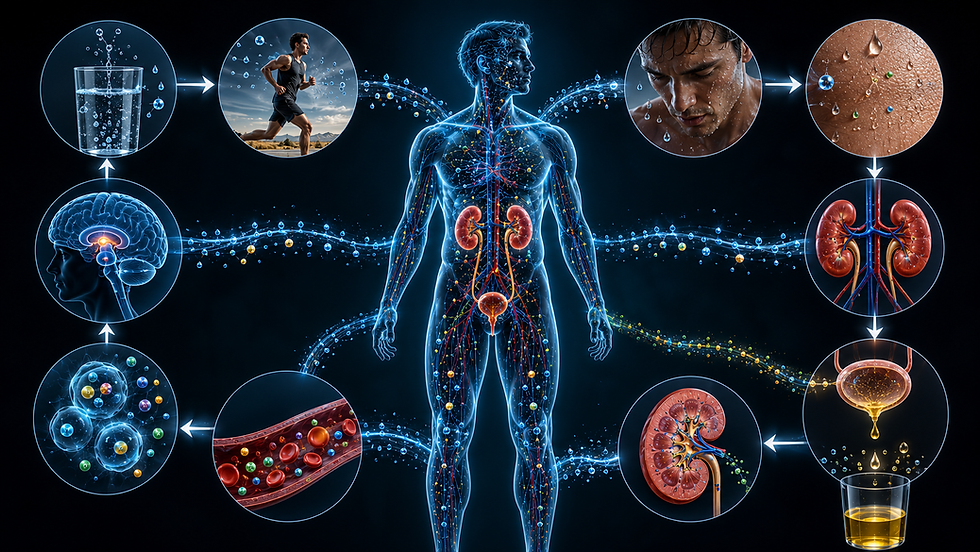
One of the biggest reasons people become confused about hydration is because they assume more urination means worse hydration. In reality, healthy hydration often involves normal and appropriate urine production. Your kidneys are not trying to hold onto every drop of fluid you consume, nor are they trying to get rid of hydration as quickly as possible. They're trying to maintain balance.
This is where the FLOW Protocol comes in.
Rather than focusing on how often you're going to the bathroom, the FLOW Protocol helps you understand what your body is actually trying to accomplish.
F — Fluid Intake
The first question is always:
How much fluid are you consuming?
Many people start electrolyte supplementation at the same time they intentionally increase water intake.
They go from drinking:
40 ounces per day
to:
80–120 ounces per day
Then they become surprised when urination increases. The electrolyte drink gets blamed. The increased fluid intake gets ignored.
Often, the kidneys are simply responding appropriately to increased hydration.
L — Losses
Hydration requirements are driven by losses.
Common sources include:
Sweat
Breathing
Exercise
Heat exposure
Illness
Travel
A person sitting in an air-conditioned office experiences very different losses than a runner training in Florida during August.
This is why hydration strategies should always be individualized.
The more fluid you're losing, the more important electrolyte replacement becomes.
O — Osmotic Balance
This is where electrolytes become especially important.
Water follows electrolytes.
When sodium, potassium, and other electrolytes are properly balanced, the body can distribute fluids more effectively.
This helps support:
Blood volume
Cellular hydration
Temperature regulation
Cardiovascular function
Electrolytes don't just help you drink more.
They help your body use fluids more efficiently.
W — Watch Urine Patterns
Urine provides valuable feedback, not perfect feedback, but useful feedback.
Pay attention to:
Frequency
Color
Volume
Changes from your normal baseline
The goal isn't to obsess over every bathroom trip.
The goal is to identify trends.
Your body often provides clues before performance begins to suffer.
Do Electrolytes Make You Retain Water?
This is where many people become confused.
On one hand, they may notice more urination. On the other hand, they hear that electrolytes help retain fluids. Both can be true. Electrolytes help regulate fluid balance. That means they can help retain water where it's needed while still allowing the kidneys to eliminate excess fluid.
Think of it like a thermostat. A thermostat doesn't simply make a room hotter. It helps regulate temperature, and electrolytes work similarly. Their role is regulation, not indiscriminate fluid retention.
This distinction is important because many people interpret every hydration-related change as either good or bad.
The body sees things differently. The body sees balance.
Electrolytes and Kidney Function
The kidneys play a central role in electrolyte regulation.
Every day they constantly adjust:
Sodium levels
Potassium levels
Fluid volume
Blood pressure
This is one reason hydration and kidney health are so closely connected.
Healthy kidneys continuously evaluate:
Do we need to conserve water?
Do we need to eliminate water?
Do we need to retain sodium?
Do we need to release sodium?
These adjustments happen continuously, most people never notice them, urination is simply one visible outcome of this invisible process.
Why You Might Pee More After Starting Electrolytes
Several scenarios commonly explain this experience.
You Were Previously Under-hydrated
This is perhaps the most common explanation. Many people don't realize they were chronically under-hydrated until they begin paying attention to hydration.
Once fluid intake improves, kidney function normalizes. Urination often increases.
You're Drinking More Water
This sounds obvious. Yet it's frequently overlooked.
Many individuals begin consuming significantly more fluids when they start using electrolyte products.
The body responds accordingly.
You're No Longer Conserving Fluids
When hydration improves, the body may no longer need to aggressively conserve water.
This can result in increased urine output. Again, this is not necessarily a problem. It's often a sign that fluid balance is improving.
Why Athletes Often Have a Different Experience
Athletes frequently operate under different physiological conditions.
They lose substantial fluids through:
Sweat
Breathing
Heat exposure
During these situations, electrolyte intake often helps support fluid retention and circulation.
The result?
Some athletes notice less frequent urination after consuming electrolytes.
This doesn't mean electrolytes are doing something different, it means the body's needs are different.
Hydration is context-dependent, and the body adapts based on demand.
Electrolytes, Travel, and Bathroom Frequency
Travel creates a unique hydration challenge.
Many travelers experience:
Mild dehydration
Lower activity levels
Reduced fluid intake
Altered sleep patterns
Airplane cabins often maintain humidity levels far below what most people encounter on the ground. This can contribute to fluid losses.
Some travelers begin using electrolytes and notice increased urination. Others notice improved hydration with no significant change.
Again, context matters.
The body's response depends on its starting point.
This is one reason experienced travelers focus on hydration before, during, and after travel rather than trying to "catch up" later.
Electrolytes and Hot Yoga
Hot yoga presents another interesting hydration scenario.
As discussed in our article Electrolytes for Hot Yoga, sweat losses can become substantial during heated sessions.
Many participants leave class weighing less than when they arrived.
This often reflects fluid loss, not fat loss.
When fluids and electrolytes are replaced appropriately, normal hydration status returns.
Urination patterns may change depending on:
Fluid intake
Sweat rate
Class intensity
The goal isn't minimizing bathroom visits.
The goal is restoring hydration.
Endurance athletes often have some of the most complex hydration demands.
Long-distance runners, cyclists, triathletes, and ultramarathon athletes can lose significant amounts of:
Water
Sodium
Chloride
through prolonged sweating.
Research from the American College of Sports Medicine continues emphasizing the importance of replacing both fluids and electrolytes following prolonged exercise.
When electrolyte replacement matches sweat losses, hydration efficiency often improves.
This is one reason many endurance athletes prioritize electrolyte intake during training and competition.
Common Hydration Mistakes People Make
One of the biggest mistakes people make is assuming hydration can be measured by a single variable.
Examples include:
Obsessing Over Urine Frequency
More urination does not automatically mean poor hydration.
Assuming Electrolytes Work Like Diuretics
Electrolytes regulate fluids. They do not function like caffeine or certain medications.
Ignoring Sweat Losses
Activity dramatically changes hydration requirements.
Focusing Only on Water
Hydration involves both fluids and electrolytes.
Waiting Until You're Thirsty
Thirst can be a useful signal, but it isn't always an early signal, and by the time thirst becomes noticeable, performance may already be affected.
Ariel Hernandez's Perspective: Hydration Is Feedback, Not a Formula
One of the challenges with hydration advice is that people want a formula.
Tell me exactly how much to drink.
Tell me exactly how often I should pee.
Tell me exactly what color my urine should be.
The body doesn't work that way.
From Ariel Hernandez's experience working with athletes, military personnel, and everyday adults, hydration is less about rigid rules and more about learning to interpret feedback.
Your body is constantly communicating, energy levels, recovery, performance, urine patterns, thirst, and more.
The goal isn't to force your body into a specific hydration formula, the goal is to understand what it's telling you.
A person training outdoors in Tampa during the summer should not expect the same hydration needs as someone sitting at a desk in a climate-controlled office.
The demands are different, and the physiological response is different.
The solution should be different too.
He would say, "The more in tune you become with your body, the easier hydration becomes. You stop guessing and start recognizing the signals that your body has been giving you all along."
That's the real goal… Not fewer bathroom trips, but better awareness, better performance, and better recovery.
Where HPSTIX Fits Into the Conversation
Hydration isn't just about drinking more, it's about drinking smarter.
Electrolytes help support:
Fluid balance
Hydration efficiency
Recovery
Performance
HPSTIX was developed around the idea that hydration should be practical and portable without forcing people to guess what their body needs.
Whether you're:
Traveling
Training
Working outdoors
Practicing hot yoga
Preparing for an endurance event
electrolytes can help support the body's natural fluid regulation systems.
Because hydration isn't measured by how often you pee. It's measured by how well your body performs.
Stay Connected With Human Performance HQ
Join the Human Performance HQ newsletter at the bottom of this page for evidence-based insights on:
Hydration
Electrolytes
Recovery
Performance nutrition
Cognitive performance
Longevity
Human performance optimization
Get science-backed strategies delivered directly to your inbox.
Perform. Evolve. Achieve.
FAQs
Do electrolytes make you pee more?
Sometimes. Electrolytes themselves do not directly force increased urination, but they often accompany increased fluid intake and improved hydration habits. In many cases, more frequent urination reflects improved hydration status rather than a problem.
Why do I pee more after drinking electrolytes?
The most common reason is that you're consuming more fluids overall. If you were previously under-hydrated, your kidneys may begin regulating fluids more normally once hydration improves. This can lead to increased urine production.
Do electrolytes make you retain water?
Electrolytes help regulate fluid balance and can support water retention where it's physiologically needed. This doesn't mean they cause excessive fluid retention. Their primary role is maintaining balance.
Can electrolytes reduce frequent urination?
In some situations, yes. Individuals experiencing dehydration or significant sweat losses may find that electrolytes improve fluid retention and hydration efficiency. The outcome depends on the individual's hydration status and environment.
How do electrolytes affect kidney function?
The kidneys rely on electrolytes to help regulate fluid balance, blood volume, and blood pressure. Electrolytes support normal physiological processes that allow the kidneys to determine when fluids should be retained or eliminated.
Should I drink electrolytes if I'm dehydrated?
Electrolytes can be beneficial when dehydration involves both fluid and electrolyte losses, particularly after sweating, exercise, illness, or heat exposure. Water remains important, but electrolytes help support fluid balance and hydration efficiency.
Are electrolytes better than water for hydration?
Not necessarily. Water remains the foundation of hydration. Electrolytes become increasingly important when significant sweat losses, heat exposure, prolonged exercise, or other conditions increase electrolyte demands.
RESEARCH BACKED CITATIONS
Cheuvront, S. N., & Kenefick, R. W. (2014). Dehydration: Physiology, assessment, and performance effects. Comprehensive Physiology, 4(1), 257–285.https://doi.org/10.1002/cphy.c130017
Armstrong, L. E., Johnson, E. C., McKenzie, A. L., Ellis, L. A., Williamson, K. H., & Ganio, M. S. (2021). Hydration biomarkers and performance outcomes. Nutrients, 13(7), 2444.https://www.mdpi.com/2072-6643/13/7/2444
Sawka, M. N., Burke, L. M., Eichner, E. R., Maughan, R. J., Montain, S. J., & Stachenfeld, N. S. (2007). American College of Sports Medicine position stand: Exercise and fluid replacement. Medicine & Science in Sports & Exercise, 39(2), 377–390.https://journals.lww.com/acsm-msse/fulltext/2007/02000/exercise_and_fluid_replacement.22.aspx
Baker, L. B. (2019). Physiology of sweat gland function and sodium losses during exercise. Sports Medicine, 49(Supplement 2), 25–36.https://link.springer.com/article/10.1007/s40279-019-01188-4
National Institute of Diabetes and Digestive and Kidney Diseases (NIDDK). Your Kidneys & How They Work. National Institutes of Health.https://www.niddk.nih.gov/health-information/kidney-disease/kidneys-how-they-work
Other Resources
National Kidney Foundation – How Your Kidneys Work https://www.kidney.org/kidney-topics/how-your-kidneys-work
NIDDK – Your Kidneys & How They Work https://www.niddk.nih.gov/health-information/kidney-disease/kidneys-how-they-work
Harvard Health – How Much Water Should You Drink? https://www.health.harvard.edu/staying-healthy/how-much-water-should-you-drink
Cleveland Clinic – Electrolytes Explained https://my.clevelandclinic.org/health/body/23013-electrolytes
Mayo Clinic – Water: How Much Should You Drink Every Day? https://www.mayoclinic.org/healthy-lifestyle/nutrition-and-healthy-eating/in-depth/water/art-20044256
American College of Sports Medicine Hydration Position Stand https://journals.lww.com/acsm-msse/fulltext/2007/02000/exercise_and_fluid_replacement.22.aspx


