
Jobs in Human Performance
Updated: Oct 8

The Complete Career Guide to Building a Career in Human Performance, Sports Science, and Tactical Performance
If you had asked me ten years ago what a career in Human Performance looked like, I probably would have given you a much shorter answer.
I would have said something like, "Become a strength coach."
Today, that answer barely scratches the surface.
The field of Human Performance has exploded over the past decade. What was once limited primarily to professional sports has expanded into virtually every industry where people are expected to perform at a high level.
Today you'll find Human Performance professionals working with:
Professional athletes
Olympic teams
Military units
Special Operations Forces
Firefighters
Law enforcement agencies
Border Patrol
The Secret Service
Healthcare systems
Universities
Fortune 500 companies
Corporate executives
Tactical organizations
Rehabilitation clinics
Private performance centers
The profession has evolved because organizations have realized something important:
People perform better when performance is intentionally developed rather than left to chance.
As someone who previously worked as a Director of Human Performance, I've had the opportunity to experience this profession from multiple perspectives.
I've helped establish Human Performance Centers supporting operational military units.
I've collaborated with strength coaches, physical therapists, athletic trainers, registered dietitians, physicians, psychologists, and operational leaders.
I've seen firsthand how integrated Human Performance Programs improve readiness while reducing injuries.
Those experiences eventually inspired me to create Human Performance HQ, because I believe these same principles shouldn't be reserved only for elite athletes or military organizations.
Whether you're a college student considering your degree, someone thinking about changing careers, or an experienced professional looking to specialize in Human Performance, this guide will show you what the profession really looks like.
You'll learn:
What Human Performance careers involve
The fastest-growing Human Performance jobs
Education and certifications employers value
Military and tactical career opportunities
Sports science careers
Salary expectations
Skills that separate great Human Performance professionals from average ones
How to build a long-term career in one of the fastest-growing fields in health and performance
The Short Answer
Jobs in Human Performance combine exercise science, physiology, biomechanics, nutrition, psychology, recovery, and coaching to improve how people perform physically and mentally.
Career opportunities now exist across:
Professional sports
Collegiate athletics
Military Human Performance
Tactical organizations
Healthcare
Corporate wellness
Research
Education
Private coaching
Entrepreneurship
As technology continues to transform healthcare and performance optimization, Human Performance is becoming one of the fastest-growing interdisciplinary career fields in the world.
What Are Jobs in Human Performance?
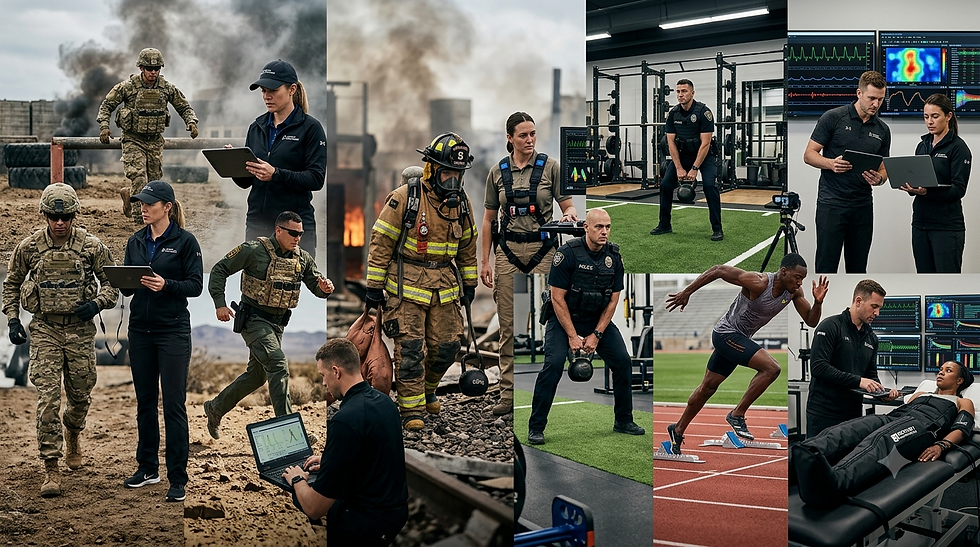
At its core, Human Performance is about helping people become more capable.
That might mean helping:
An NFL athlete improve speed.
An Airman reduce injury risk before deployment.
A firefighter tolerate heat stress.
A CEO improve energy and cognitive performance.
An older adult maintain independence.
A tactical operator recover between missions.
Although these clients look very different, the goal remains remarkably similar.
Help people perform better.
Human Performance professionals rarely focus on one variable.
Instead, they optimize multiple systems simultaneously. That often includes:
Physical performance
Nutrition
Recovery
Sleep
Movement quality
Injury prevention
Stress management
Cognitive performance
Long-term health
It's one of the reasons I enjoy this profession so much. Every client presents a different challenge. Every organization has different performance demands. And there's always another opportunity to learn.
Why Human Performance Careers Are Growing
The demand for Human Performance professionals has never been higher. Several trends are driving this growth. Organizations increasingly recognize that healthy employees perform better. Healthcare systems are shifting toward prevention.
Military organizations are investing heavily in readiness. Professional sports continue expanding sports science departments. Wearable technology has made performance data more accessible than ever. Research continues demonstrating that movement, nutrition, sleep, and recovery influence nearly every aspect of health.
The result? Human Performance professionals are becoming valuable across multiple industries, not just athletics.
The Ariel Hernandez Perspective
When I first entered this profession, I thought my career would revolve around fitness. What I discovered was something much bigger. Human Performance isn't really about fitness; it's about solving problems.
Throughout my career, I've had the opportunity to help establish Human Performance Centers supporting operational military units, including experience with Pararescue, Fighter Wings, and more.
I’ve had experience leading Human Performance Teams, where on any given day I may collaborate with:
Strength and conditioning coaches
Physical therapists
Athletic trainers
Registered dietitians
Physicians
Behavioral health providers
Squadron leadership
Operational commanders
Stakeholders at various levels
Private industry vendors
Our goal isn't simply helping Airmen pass a fitness assessment. It's helping them stay healthy enough to perform their mission. That shift completely changed how I view this profession.
The best Human Performance professionals aren't necessarily the smartest exercise physiologists. They're the best collaborators. They understand that performance is multidisciplinary. That philosophy became the foundation of Human Performance HQ.
The Evolution of Human Performance Careers

Human Performance careers didn't begin in healthcare. They began in sports.
Professional organizations realized decades ago that athletes improved faster when multiple specialists worked together.
Instead of hiring only a strength coach, teams added:
Sports scientists
Dietitians
Athletic trainers
Physical therapists
Performance psychologists
Data analysts
Eventually the military noticed. Then healthcare. Then tactical organizations. Today the profession continues expanding into nearly every field where performance matters.
The Biggest Industries Hiring Human Performance Professionals
Professional Sports
Professional sports remain one of the largest employers.
Examples include:
NFL
NBA
NHL
MLB
MLS
UFC
Olympic Programs
Typical roles include:
Sports Scientist
Strength Coach
Recovery Specialist
Performance Director
Exercise Physiologist
Collegiate Athletics
Universities continue expanding sports performance departments.
Many NCAA programs now employ:
Multiple strength coaches
Sports dietitians
Sports scientists
Recovery coordinators
Performance analysts
These environments are excellent for professionals interested in athlete development.
Military Human Performance Careers

This is one of the fastest-growing areas in the profession. Especially with the stand up of the Office of Secretary of War, Warfighter Performance Optimization.
Modern military organizations increasingly recognize service members as tactical athletes.
Rather than simply conducting annual fitness testing, embedded Human Performance teams improve readiness year-round.
Air Force
The Air Force has expanded Integrated Operational Support (IOS) and Operational Support Teams (OSTs), soon to become True North Plus (TN+).
Professionals may work alongside:
Air Force Human Performance Program Managers
Strength coaches
Physical therapists
Registered dietitians
Athletic trainers
Operational psychologists
These teams support:
Fighter squadrons
Rescue units
Maintenance groups
Logistics squadrons
Special Warfare
Medical Groups
As someone working within this environment, I can confidently say it's one of the most rewarding career paths available because you see your work directly improving mission readiness.
Army
The Army's Holistic Health and Fitness (H2F) initiative represents one of the largest investments in tactical Human Performance anywhere in the world.
H2F teams include:
Strength Coaches
Occupational Therapists
Physical Therapists
Athletic Trainers
Registered Dietitians
Cognitive Performance Specialists
These professionals support Brigade Combat Teams through an integrated approach centered on five readiness domains.
USSOCOM
Special Operations has long recognized the importance of Human Performance.
Programs such as Preservation of the Force & Family (POTFF) employ experts in:
Performance Psychology
Strength & Conditioning
Sports Medicine
Nutrition
Sleep
Recovery
Working in Special Operations represents one of the most collaborative Human Performance environments available.
Public Safety Careers
Human Performance is rapidly expanding into public safety.
Fire Departments
Firefighters are increasingly viewed as occupational athletes.
Departments now hire or collaborate with professionals specializing in:
Strength training
Injury prevention
Heat resilience
Mobility
Recovery
Law Enforcement
Progressive police agencies now incorporate:
Tactical fitness
Officer wellness
Resilience programs
Recovery education
Movement screening
The profession continues moving toward year-round performance optimization.
Border Patrol
Border Patrol Agents work in demanding operational environments requiring:
Endurance
Heat tolerance
Load carriage
Recovery
Injury prevention
Human Performance professionals help improve readiness while reducing occupational injuries.
Secret Service and Federal Agencies
Federal agencies increasingly recognize that protective operations require exceptional physical and mental performance.
Opportunities continue expanding within:
Secret Service
FBI
DEA
U.S. Marshals
ATF
Many organizations now integrate strength coaches, wellness specialists, and performance professionals into training programs.
Healthcare Careers
Healthcare offers another rapidly expanding career path.
Examples include:
Exercise Physiologist
Cardiac Rehabilitation Specialist
Clinical Exercise Specialist
Wellness Coordinator
Lifestyle Medicine Professional
Many hospitals now recognize exercise as medicine. That philosophy aligns perfectly with Human Performance.
Corporate Human Performance
This may become one of the fastest-growing sectors over the next decade. Companies increasingly invest in:
Executive wellness
Leadership resilience
Ergonomics
Cognitive performance
Stress management
Sleep optimization
Healthy employees are more productive employees. Organizations are beginning to measure that return on investment.
Education: What Degree Do You Need?
There isn't one perfect degree.
Common backgrounds include:
Exercise Science
Exercise Physiology
Kinesiology
Human Performance
Athletic Training
Physical Therapy
Nutrition
Sports Medicine
Psychology
Personally, my educational path combined exercise science with business. That combination has been invaluable because Human Performance isn't only about physiology. Leadership, communication, operations, and systems thinking matter just as much.
Certifications That Employers Value
Some of the most respected certifications include:
NSCA Certified Strength and Conditioning Specialist (CSCS)
Often considered the gold standard for strength and conditioning.
NSCA Tactical Strength and Conditioning Facilitator (TSAC-F)
Ideal for military, law enforcement, and fire service careers.
ACSM Exercise Physiologist (EP-C)
Excellent for healthcare and clinical settings.
USA Weightlifting
Helpful for power development and Olympic lifting instruction.
Precision Nutrition
Useful for professionals incorporating nutrition coaching into practice.
Common Misconceptions
"You have to work with professional athletes."
Not true. Many Human Performance professionals never work in sports.
"It's just personal training."
Human Performance integrates science, healthcare, psychology, leadership, and coaching.
"There aren't many jobs."
Demand continues growing across multiple industries.
"You need a PhD."
Advanced degrees can help. They aren't required for many outstanding careers, although I do believe a Master’s will elevate your application.
10 Reasons to Choose a Career in Human Performance
Every day is different.
You improve people's lives.
The field continues growing.
Opportunities exist across multiple industries.
Science evolves constantly.
Collaboration is encouraged.
Technology continues expanding the profession.
You can specialize in numerous areas.
Entrepreneurship opportunities are abundant.
Your work creates meaningful impact.
Looking Ahead
Human Performance is no longer a niche profession. It's becoming the future of healthcare, tactical readiness, sports science, and preventive medicine. And in my opinion, we're only getting started.
Human Performance HQ Career Blueprint

One of the biggest misconceptions about careers in Human Performance is that there is one "correct" career path. There isn't. Some professionals spend their entire careers working with elite athletes. Others dedicate themselves to military readiness, rehabilitation, research, or executive performance.
The best career isn't the one with the most prestigious title. It's the one that aligns with your strengths, interests, and purpose.
Over the years, I've worked alongside strength coaches, physical therapists, registered dietitians, physicians, athletic trainers, psychologists, and operational leaders. One thing I've noticed is that the professionals who thrive the longest are the ones who never stop learning.
Rather than chasing job titles, build the skills that make you valuable anywhere.That's why I teach what I call the:
Human Performance HQ Career Blueprint. L.E.A.D.E.R:
L – Learn the Science
Everything begins with understanding the science.
Develop a strong foundation in:
Exercise physiology
Biomechanics
Nutrition
Anatomy
Motor learning
Recovery science
Sleep physiology
Behavior change
Technology will continue to evolve. Scientific principles remain your foundation.
E – Earn Practical Experience
Degrees open doors. Experience builds careers.
Seek opportunities to volunteer or intern with:
University athletic departments
Human Performance Centers
Military Human Performance Programs
Sports medicine clinics
Tactical organizations
Private performance facilities
The professionals who separate themselves early are usually those who accumulate experience before graduation.
A – Add Certifications Strategically
Not every certification is worth pursuing. Focus on credentials recognized across the industry.
Examples include:
NSCA CSCS
NSCA TSAC-F
ACSM EP-C
USAW Level 1
Precision Nutrition
FMS Level 1
Choose certifications that complement your intended career rather than collecting credentials simply to fill your résumé.
D – Develop Communication Skills
One of the most underrated skills in Human Performance is communication. You can have exceptional scientific knowledge. But if you can't explain it to:
Athletes
Airmen
Patients
Executives
Coaches
Commanders
your impact will always be limited. Learning how to communicate science simply is often more valuable than memorizing another research paper.
E – Expand Your Network
Human Performance is an incredibly collaborative profession. Some of the best career opportunities come from relationships rather than job boards.
Attend:
NSCA National Conference
NSCA Tactical Annual Training (TSAC)
ACSM Annual Meeting
Tactical Games events
Local sports medicine conferences
Human Performance workshops
Introduce yourself. Ask questions. Stay curious. Provide value, and build genuine relationships.
R – Remain Adaptable
The profession changes quickly.
Ten years ago, few organizations discussed:
Force plates
Velocity-based training
Wearable technology
HRV monitoring
AI-assisted coaching
Today they're becoming standard. Continue learning. The professionals who adapt will remain valuable regardless of how technology evolves.
Human Performance Salaries
One of the most common questions students ask is,
"How much can you make working in Human Performance?"
The answer depends heavily on education, certifications, location, and industry.
Approximate salary ranges include:
Career | Typical Salary Range |
Strength & Conditioning Coach | $45,000–$90,000+ |
Exercise Physiologist | $50,000–$85,000 |
Sports Scientist | $70,000–$130,000+ |
Human Performance Specialist | $65,000–$120,000+ |
Tactical Strength Coach | $70,000–$130,000+ |
Human Performance Program Manager | $90,000–$160,000+ |
Performance Director | $100,000–$200,000+ |
Corporate Performance Consultant | Highly variable |
Government positions supporting military Human Performance, particularly within the Department of Defense, often provide excellent long-term career stability, retirement benefits, and opportunities to influence large organizations.
Entrepreneurship in Human Performance
One of the most exciting developments in the profession is the opportunity to build something of your own.
Technology has made it possible to create:
Online coaching businesses
Human Performance consulting firms
Tactical readiness consulting
Corporate wellness programs
Educational platforms
Content businesses
Supplement companies
Performance technology startups
Human Performance HQ is a perfect example.
What began as years of experience supporting military readiness has evolved into an educational platform dedicated to helping people optimize every aspect of their lives through evidence-based performance strategies.
The future of Human Performance won't belong only to large organizations. It will also belong to professionals willing to educate, innovate, and build.
The Future of Human Performance Careers

If I had to predict where this profession is heading over the next decade, I'd say it's becoming even more integrated.
Future Human Performance professionals will likely work with:
Artificial Intelligence
Machine learning
Wearable sensors
Continuous glucose monitors
Force plates
Motion capture
Blood biomarker analysis
Personalized nutrition
Digital performance dashboards
Rather than replacing Human Performance professionals, these technologies will enhance decision-making. Data doesn't replace coaching, it informs better coaching. The professionals who combine scientific knowledge with technology and communication skills will lead the next generation of Human Performance.
The Ariel Hernandez Perspective
If I could go back and give my younger self career advice, it wouldn't be to chase a specific job title. It would be to chase opportunities that allow you to solve meaningful problems.
Looking back, every step of my career built upon the previous one. Studying exercise and nutrition science gave me the scientific foundation.
Serving in the Air Force taught me leadership, adaptability, and the realities of operational performance.
Building Human Performance Centers across my entire career provided me with lessons learned on what integrated Human Performance looks like when it becomes part of an organization's culture.
My MBA helped me understand systems, leadership, and organizational change.
As a Human Performance Expert, I’v had the privilege of helping improve operational readiness across multiple units. Those experiences eventually led me to create Human Performance HQ.
Not because I wanted another fitness website. Because I wanted to bridge the gap between cutting-edge Human Performance research and practical strategies that anyone can apply.
If you're considering a career in Human Performance, remember this: Your greatest value won't come from knowing the most science. It will come from your ability to apply that science in ways that genuinely improve people's lives.
10 Characteristics of Exceptional Human Performance Professionals
Lifelong learners.
Excellent communicators.
Evidence-based decision makers.
Strong collaborators.
Curious problem solvers.
Adaptable leaders.
Ethical practitioners.
Systems thinkers.
Passionate educators.
Professionals who genuinely care about helping others succeed.
FAQs
What jobs are available in Human Performance?
Human Performance careers span professional sports, collegiate athletics, military organizations, tactical agencies, healthcare systems, corporate wellness, research institutions, universities, and private businesses. Roles include Human Performance Specialist, Exercise Physiologist, Strength and Conditioning Coach, Sports Scientist, Performance Director, Tactical Strength Coach, Human Performance Program Manager, and many others. As organizations increasingly prioritize prevention and readiness, opportunities continue to expand across industries.
What degree is best for a career in Human Performance?
Common degrees include Exercise Science, Exercise Physiology, Kinesiology, Human Performance, Sports Medicine, Nutrition, Athletic Training, Physical Therapy, and Psychology. The "best" degree depends on your career goals, but pairing scientific knowledge with communication, leadership, and business skills often creates the most career flexibility.
Do I need a master's degree?
Not always. Many excellent positions require only a bachelor's degree combined with relevant certifications and practical experience. However, graduate education can improve competitiveness for leadership roles, research positions, and specialized careers. More importantly, employers consistently value hands-on experience alongside formal education.
What certifications should I earn?
Highly respected certifications include the NSCA Certified Strength and Conditioning Specialist (CSCS), NSCA Tactical Strength and Conditioning Facilitator (TSAC-F), ACSM Exercise Physiologist (EP-C), USA Weightlifting certifications, and Precision Nutrition credentials. Choose certifications that align with your desired career rather than pursuing credentials simply to collect them.
Can I work with the military as a Human Performance professional?
Absolutely. Opportunities continue expanding through organizations such as the Air Force's Integrated Operational Support (IOS) program, Army Holistic Health and Fitness (H2F), USSOCOM's Preservation of the Force & Family (POTFF), and other tactical performance initiatives. These careers allow professionals to directly improve operational readiness while working alongside multidisciplinary teams.
Is Human Performance a good long-term career?
Yes. The profession continues growing as organizations recognize the value of proactive health, injury prevention, and performance optimization. Advances in sports science, wearable technology, healthcare, and tactical readiness are creating new opportunities every year. Professionals who remain adaptable and continue learning will likely enjoy strong career prospects.
How can I stand out in Human Performance?
Develop both depth and breadth. Build a strong scientific foundation, pursue meaningful practical experience, communicate effectively, collaborate across disciplines, and never stop learning. Employers increasingly seek professionals who can integrate multiple aspects of performance rather than focusing narrowly on one specialty.
Key Takeaways
If you're considering a career in Human Performance, remember these principles:
Human Performance is one of the fastest-growing interdisciplinary professions.
Opportunities extend far beyond professional sports.
Military, public safety, healthcare, and corporate sectors continue expanding Human Performance initiatives.
Practical experience is just as valuable as academic credentials.
Strong communication and collaboration often distinguish exceptional professionals.
Lifelong learning is essential in a rapidly evolving field.
Your career should focus on improving people's lives, not simply improving performance metrics.
Continue Exploring Human Performance HQ
Continue learning with these cornerstone guides:
Join the Human Performance HQ Community
Subscribe to the Human Performance HQ Newsletter at the bottom of this page to stay up-to-date with what we have going on.
Our mission is simple:
PERFORM | EVOLVE | ACHIEVE
HUMAN PERFORMANCE JOB RESOURCES
National Strength and Conditioning Association. Careers in Strength and Conditioning & Sports Science. https://www.nsca.com/professional-development/nsca-job-board/?srsltid=AfmBOoqfsIi8w8vk9fQ6PtbfRqr89QLR1m36mgN3zRvHrVzcwYPvIOdv
National Strength and Conditioning Association. Tactical Strength and Conditioning (TSAC) Program. https://www.nsca.com/certification/tsac-f/
American College of Sports Medicine. ACSM Career Center and Exercise Physiology Resources. https://www.acsm.org
U.S. Bureau of Labor Statistics. Exercise Physiologists. https://www.bls.gov/ooh/healthcare/exercise-physiologists.htm
U.S. Bureau of Labor Statistics. Athletic Trainers. https://www.bls.gov/ooh/healthcare/athletic-trainers.htm
Department of the Army. FM 7-22 Holistic Health and Fitness (H2F). https://armypubs.army.mil/ProductMaps/PubForm/Details.aspx?PUB_ID=1025968
U.S. Special Operations Command. Preservation of the Force & Family (POTFF). https://www.socom.mil/POTFF
National Strength and Conditioning Association. Tactical Annual Training. https://www.nsca.com/events/tactical-annual-training/
Garber, C. E., Blissmer, B., Deschenes, M. R., et al. (2011). Quantity and Quality of Exercise for Developing and Maintaining Cardiorespiratory, Musculoskeletal, and Neuromotor Fitness in Apparently Healthy Adults. Medicine & Science in Sports & Exercise, 43(7), 1334–1359.


