
Pete Hegseth’s Military Testosterone Policy: Testing, TRT, and What Service Members Should Know
Updated: Sep 23
Last updated: September 4, 2026

Disclaimer
Independent commentary: This article represents the author's personal analysis based on publicly available information and does not represent the Department of Defense, Department of the Air Force, or U.S. Government. The author is not speaking in an official government capacity.
Pete Hegseth’s military testosterone policy directs Active Duty and Reserve Component service members age 30 and older to undergo testosterone-deficiency screening through their Periodic Health Assessment, or PHA. Service members under 30 may request screening, while testosterone replacement therapy remains voluntary for those diagnosed with a legitimate deficiency.
However, the implementation details are still changing.
The Defense Health Agency released comprehensive clinical guidance on September 2, 2026, but temporarily rescinded it the following day to make updates. According to reporting from Reuters, interim guidance remains in effect and final clinical guidance is expected later. The temporary withdrawal of the clinical document does not necessarily mean the original screening initiative was canceled.
That distinction matters. Military members do not need another headline telling them whether the policy is good or bad. They need to know how testosterone screening could work, what a low result actually means, and whether testosterone replacement therapy could improve, or unintentionally complicate, medical readiness.
Quick Answer: What Does the Military Testosterone Policy Require?
Here is what service members need to know right now:
Active Duty and Reserve Component members age 30 and older are included in the screening directive.
Screening is intended to become part of the annual Periodic Health Assessment.
Service members under 30 may request testosterone screening.
A screening result is not the same as a confirmed diagnosis.
Testosterone replacement therapy is not mandatory.
Detailed implementation procedures are being updated.
A low result should be evaluated alongside symptoms, sleep, nutrition, medications, training load, body composition, and medical history.
The stated goal of the military testosterone policy is to identify hormone deficiencies that could affect performance, health, resilience, and mission readiness. That objective fits within the military’s broader investment in DoD Human Performance and tactical readiness.
The challenge will be building a system that distinguishes a true medical deficiency from a temporary physiological response to military life.
If you are unsure of where or how to start optimizing, we provide quality education on Human Performance to ensure you are making the most out of your physical and cognitive performance.
Was Pete Hegseth’s Testosterone Policy Rescinded?
No, not based on the currently available information.
The Department temporarily withdrew the detailed clinical guidance released on September 2 so it could be updated. Reporting from Reuters and Stars and Stripes indicates that interim guidance remained in effect while the final version was being revised.
The underlying July 15 directive called for testosterone-deficiency screening among Active Duty and Reserve Component service members age 30 and older. It also allowed younger service members to request screening during their PHA.
Therefore, describing the military testosterone policy as completely canceled would be premature. The more accurate explanation is: The screening initiative remains relevant, but the final clinical process for evaluating and treating hormone deficiencies is being revised.
Service members should follow official guidance from their medical treatment facility rather than assuming that a news headline has eliminated or finalized the requirement.
Why Is the Department of War Screening Testosterone?
Testosterone supports more than muscle growth. In someone with a true deficiency, low testosterone can be associated with changes in sexual function, bone health, lean body mass, mood, energy, red blood cell production, and recovery.
The military’s interest is understandable. Warfighters operate under conditions that can challenge nearly every system involved in hormone regulation:
Chronic sleep restriction
Shift work and circadian disruption
High physical workloads
Energy deficits
Operational stress
Traumatic brain injury
Obesity and metabolic dysfunction
Frequent travel and irregular schedules
Limited recovery between training cycles
Research on Special Operations personnel has also identified endocrine dysfunction as one element of “Operator Syndrome,” a broader collection of sleep, neurological, musculoskeletal, psychological, and metabolic problems associated with a high operational burden. Importantly, the original Operator Syndrome framework treated endocrine dysfunction as part of a larger system, not an isolated explanation for every symptom.
Properly implemented, the military testosterone policy could help providers identify service members who have been living with an overlooked medical issue. It could also create an opening for more complete conversations about sleep apnea, under-fueling, obesity, medication effects, brain injury, fertility, mental health, and recovery.
Does Every Service Member Over 30 Automatically Need a Blood Test?

The final workflow is still being clarified, but screening should not be confused with diagnosis.
A questionnaire may identify symptoms or risk factors that justify laboratory testing. If testing reveals a low testosterone concentration, that finding should normally be confirmed under standardized conditions before long-term treatment is considered.
The American Urological Association’s testosterone-deficiency guideline recommends using two separate early-morning total testosterone measurements when making a diagnosis. Symptoms and clinical context matter because testosterone changes throughout the day and can be temporarily affected by sleep, illness, calorie intake, medication use, and demanding exercise.
A readiness-centered evaluation should ask:
Was the blood sample collected early in the morning?
Was the member sleep-deprived, sick, under-fueled, or recovering from field training?
Is the result consistently low on a second test?
Does the member have symptoms consistent with testosterone deficiency?
Could another condition explain both the symptoms and laboratory result?
Is the problem originating in the testes, pituitary, hypothalamus, medication use, or lifestyle?
Could the underlying cause be corrected without committing the member to long-term medication?
That process protects the service member while improving the quality of the readiness data collected across the force.
Can Military Training Temporarily Lower Testosterone?
Yes. This is one of the most important gaps in the current public conversation.
A study involving soldiers during an eight-day field exercise found that waking testosterone declined during intensive training that included severe sleep restriction. Testosterone subsequently recovered when sleep opportunities improved, even though physical activity continued.
Research involving Special Operations training has similarly connected low energy availability and sleep deprivation with reductions in testosterone, lean body mass, and strength.
This creates a practical testing problem. Imagine that a service member completes night operations, sleeps four hours, eats inadequately, trains hard, and completes laboratory work the following morning. A low result might reflect real physiological strain, but it may not prove permanent hypogonadism.
That does not make the result meaningless. It may reveal that the member’s recovery system is failing.
From a human-performance perspective, providers should treat an abnormal testosterone result as the beginning of an investigation, not the end of one.
The Ariel Hernandez Perspective: Readiness Is a System
Throughout my career in Air Force Human Performance, I have worked alongside strength and conditioning coaches, physical therapists, athletic trainers, performance dietitians, physicians, psychologists, social workers, commanders, and operational personnel.
My professional background includes more than a decade in human performance, including experience supporting military populations and contributing to multidisciplinary human performance programs. That experience has reinforced an important principle: operational performance problems rarely have a single cause.
An Airman reporting fatigue, poor recovery, low motivation, and declining performance may have low testosterone. But that same Airman may also be:
Sleeping five hours per night
Working rotating shifts
Using alcohol to fall asleep
Under-eating during high-volume training
Living with untreated sleep apnea
Carrying excessive occupational stress
Recovering from a traumatic brain injury
Following an unsustainable fitness program
Testosterone replacement therapy might be appropriate when a true deficiency is confirmed, but medication should be integrated into a complete human-performance plan.
That is the difference between treating a laboratory number and building readiness.
Service members should also review their hydration strategy for training and prepare for the demands of the new Air Force fitness standards. Hormones operate within the same body affected by training, sleep, nutrition, hydration, and stress.
Seven Ways TRT Could Affect Military Readiness

1. Correcting a True Deficiency May Improve Function
For a symptomatic service member with repeatedly low testosterone, properly supervised TRT may improve sexual symptoms, anemia, lean body mass, and some measures of well-being. The benefit is restoration toward a healthy physiological range, not creating a medically enhanced warfighter.
2. Increased Hematocrit Can Become a Readiness Issue
Testosterone can stimulate red blood cell production. That can help correct anemia, but it can also raise hematocrit excessively.
The Endocrine Society recommends checking hematocrit before treatment, again approximately three to six months after starting therapy, and then annually. The AUA identifies a hematocrit of 54% or higher as a threshold requiring clinical intervention.
A member who develops elevated hematocrit may require medication adjustment, additional laboratory testing, evaluation for contributing conditions, or a temporary interruption in treatment. That introduces a preventable readiness burden if monitoring is inconsistent.
3. Untreated Sleep Apnea May Complicate Treatment
Sleep apnea is already common in military and veteran populations. It can contribute to fatigue and may influence hormone health, while testosterone therapy can be inappropriate in certain patients with severe untreated obstructive sleep apnea.
Screening programs should therefore avoid treating fatigue as proof of low testosterone. Sleep quality, CPAP adherence, shift schedules, and sleep-disordered breathing should be evaluated as part of the same readiness picture.
Personally, sleep apnea has effected my quality of life even while on TRT and I would suggest to concurrently approach both, as sleep quality can significantly reduce quality of life in ways you may not be aware of.
4. TRT Can Suppress Fertility
Exogenous testosterone can suppress the hormonal signals responsible for sperm production. That can reduce fertility, sometimes dramatically.
A service member planning to have children deserves counseling before treatment, not after discovering a problem. The possibility of future family planning should be documented during shared decision-making.
It is important to consult with your medical provider about options to combat and preserve fertility issues.
5. TDYs and Deployments Create Medication-Continuity Problems

A prescription that works at home station must also work during a TDY, deployment, field exercise, or remote assignment.
Potential friction points include:
Transporting a controlled medication
Maintaining an adequate prescription supply
Safely storing medication and injection equipment
Disposing of sharps
Completing laboratory monitoring while away
Managing time-zone and schedule changes
Replacing lost or damaged medication
Accessing a provider if side effects appear
These are not reasons to deny appropriate care. They are operational requirements that should be planned before the member leaves.
6. Formulation Matters Operationally
Injections, gels, patches, pellets, nasal products, and oral testosterone do not create identical logistical demands. Some require more frequent administration, some carry a risk of skin transfer, and others may be harder to support in austere environments.
The best treatment is not simply the product that produces an acceptable laboratory value. It is the medically appropriate option the member can safely and consistently maintain during real military operations.
7. Treating the Number Could Hide the Cause
Low testosterone may be connected to obesity, insufficient sleep, under-fueling, medication effects, pituitary dysfunction, brain injury, or excessive training stress.
TRT may improve the laboratory number without correcting the reason it became low. A strong military testosterone policy should use abnormal results to trigger a broader evaluation of force health.
The Human Perforamance Readiness-Safe TRT Protocol
This protocol is not a dosing schedule. It is a science-informed clinical and operational pathway that military medical providers could adapt to individual service members.
Step 1: Identify Symptoms and Operational Context
Document symptoms, sleep duration, shift work, recent field training, energy intake, body-composition changes, medication use, alcohol intake, fertility goals, concussion history, and current mission demands.
Step 2: Standardize Testing
Obtain an early-morning total testosterone measurement under the most stable conditions operationally possible. Avoid making a permanent treatment decision from one result collected after acute sleep deprivation, illness, severe calorie restriction, or an unusually demanding training event.
Step 3: Confirm the Finding
Repeat the early-morning testosterone test on a separate day. Evaluate appropriate supporting markers and investigate whether the pattern suggests primary or secondary hypogonadism.
Step 4: Correct Reversible Contributors
Before or alongside treatment, address:
Sleep apnea and insufficient sleep
Low energy availability
Excessive training load
Obesity and metabolic health
Medication-related suppression
Alcohol misuse
Acute illness
Recovery following operational stress
Step 5: Use Shared Decision-Making
Discuss expected benefits, uncertain benefits, fertility suppression, acne, edema, blood-pressure changes, hematocrit elevation, monitoring requirements, and the possibility of long-term dependence on treatment.
The FDA removed the previous class-wide boxed-warning language about increased cardiovascular outcomes after reviewing the TRAVERSE trial, but it also required expanded blood-pressure warnings across testosterone products.
Step 6: Select an Operationally Sustainable Treatment
The prescribing clinician should select the medication, formulation, and dose based on the diagnosis, laboratory response, adverse effects, personal preferences, fertility plans, and anticipated military environment.
The goal should be an appropriate physiological range and improvement in clinically relevant symptoms, not the highest number possible.
Step 7: Build a Monitoring and Deployment Plan
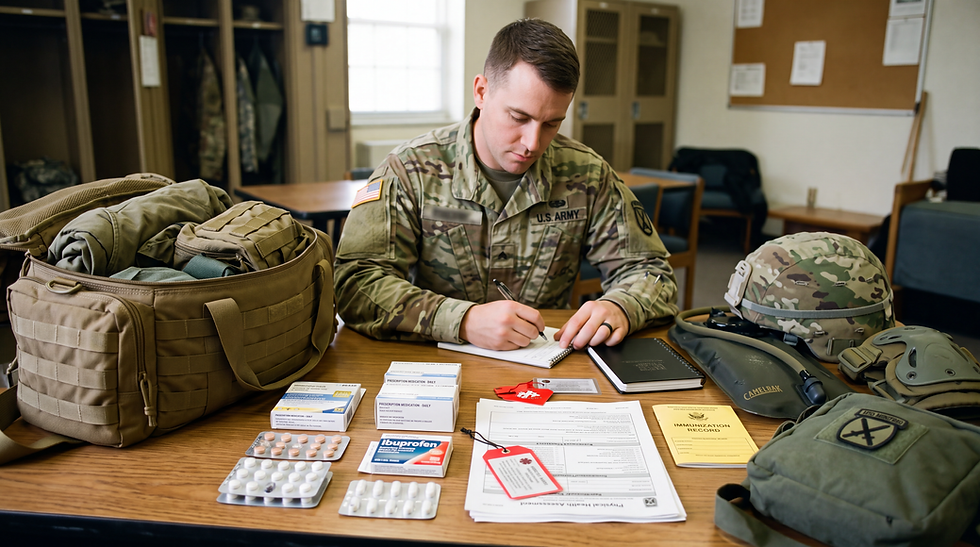
Before a TDY or deployment, confirm:
Prescription duration and refill availability
Storage requirements
Transportation documentation
Sharps and disposal procedures
Follow-up laboratory timing
Hematocrit and blood-pressure monitoring
A plan for side effects or interrupted access
Whether the destination can support ongoing care
This closes the gap between successful treatment at home station and sustainable treatment in an operational environment.
What Should Service Members Do Now?
Do not self-diagnose based on fatigue alone, and do not obtain testosterone from an unregulated source.
Instead:
Complete your PHA honestly.
Ask whether your screening involves a questionnaire, blood work, or both.
Request clarification if a result is described only as “low.”
Ask whether it should be repeated under standardized conditions.
Tell your provider about poor sleep, field training, dieting, medications, fertility plans, and sleep apnea.
Discuss upcoming TDYs and deployments before beginning therapy.
Keep copies of your prescriptions and required travel documentation.
Treat sleep, nutrition, training, hydration, and recovery as part of hormone health.
You can learn more about the broader system behind these recommendations in the Human Performance HQ guide to military Human Performance and readiness.
Final Perspective
Pete Hegseth’s military testosterone policy has the potential to uncover real health problems that may otherwise go untreated. The biggest opportunity is not simply expanding access to a laboratory test or prescription. It is using hormone screening as an entry point into better sleep care, nutrition, metabolic health, recovery, brain-health evaluation, and long-term performance support.
The military succeeds when service members are healthy, capable, deployable, and able to sustain performance over an entire career.
TRT may be one tool within that system. It should never be mistaken for the entire system.
This article is for education only and does not provide individual medical advice or a testosterone prescription. Service members should consult an authorized healthcare professional and follow current service-specific and Defense Health Agency guidance.
FAQs
Is testosterone testing mandatory in the military?
Pete Hegseth’s military testosterone policy directs mandatory testosterone-deficiency screening for Active Duty and Reserve Component service members age 30 and older. Screening is expected to occur through the Periodic Health Assessment, although the detailed clinical process is being updated. Screening does not automatically mean that every member will receive medication.
Did the Department of War cancel the testosterone policy?
The Department temporarily rescinded its September 2 clinical guidance so it could be revised, but available reporting indicates that interim guidance remained in effect. That means the implementation document was withdrawn, not necessarily the underlying military testosterone policy. Service members should watch for the final DHA guidance before drawing conclusions about the exact process.
Are service members under 30 required to have testosterone tested?
The July directive allows service members under 30 to request screening, but it does not describe their screening as universally mandatory. A younger member experiencing persistent symptoms should discuss them with a qualified military medical provider. Age alone should not determine whether symptoms deserve an appropriate clinical evaluation.
Is TRT mandatory if a service member has low testosterone?
No. The policy describes testosterone replacement therapy as voluntary. A low screening result should also be confirmed and evaluated in context before treatment is considered, because sleep loss, illness, under-fueling, and intense training may temporarily lower testosterone.
Can you take TRT while serving in the military?
A service member may receive medically indicated TRT through an authorized healthcare provider. Continued service and deployability depend on the underlying condition, treatment stability, monitoring requirements, adverse effects, and the ability to maintain care in the assigned environment. Members should not assume that a legitimate prescription automatically makes them non-deployable.
Can TRT increase hematocrit?
Yes. Testosterone can increase red blood cell production and elevate hematocrit in some patients. This is why baseline and follow-up blood counts are important, particularly during the first several months of treatment and before extended travel or deployment.
How can military members support testosterone naturally?
The most practical foundations are adequate sleep, sufficient calorie and protein intake, resistance training, healthy body composition, limited excessive alcohol intake, and treatment of conditions such as sleep apnea. These habits cannot correct every case of medical hypogonadism, but they can address common reversible contributors. They also improve readiness regardless of whether TRT is ultimately needed.
Research and High-Credibility Sources
U.S. Department of War. “Health and Human Performance Optimization to Enhance Military Readiness.” July 15, 2026.
Reuters. “Pentagon Temporarily Rescinds Guidance on Testosterone Screening for U.S. Troops.” September 3, 2026.
American Urological Association. “Testosterone Deficiency Guideline.”
Endocrine Society. “Testosterone Therapy in Men With Hypogonadism.”
FDA. “Class-Wide Labeling Changes for Testosterone Products.”
Henning et al. “Impact of Military Training Stress on Hormone Response and Recovery.” PLOS ONE, 2022.
Frueh et al. “Operator Syndrome: A Unique Constellation of Medical and Behavioral Health-Care Needs.” International Journal of Psychiatry in Medicine, 2020.
Department of Defense. “Testosterone Replacement Therapy Use Among Active Component Service Men.”
Government Accountability Office. “Military Readiness: Comprehensive Approach Needed to Address Service Member Fatigue.”
Rodden et al. “Sleep Health Is Not Optional, It’s Operational.” Military Medicine, 2026.


