
DoD Human Performance News: The Latest Military Performance, Readiness, and Tactical Health Updates
Updated: Oct 8

For decades, military readiness was largely measured by one thing, could you pass your fitness test?
Today, that question is only a small piece of the puzzle.
Modern warfare demands far more than physical fitness. Service members must maintain strength, endurance, cognitive performance, resilience, decision-making ability, and recovery while operating under conditions that include sleep deprivation, extreme temperatures, nutritional challenges, and prolonged operational stress.
Recognizing these realities, the Department of Defense has undergone one of the largest shifts in military health and readiness in its history. So much so, that they are looking to optimize male performance through the newly published Military testosterone policy. Which is apart of the broader Human Performance effort.
Rather than focusing solely on treating injuries after they occur, today's military is investing heavily in Human Performance, an integrated approach that combines sports science, strength and conditioning, nutrition, physical therapy, recovery, sleep optimization, behavioral health, and performance analytics to help warfighters perform at their highest level before problems develop.
DOD Human Performance Programs:
Air Force Integrated Operational Support (IOS)
True North Plus (TN+)
Operational Support Teams (OSTs) - No Longer A Program
Army Holistic Health and Fitness (H2F)
USSOCOM Preservation of the Force & Family (POTFF)
Integrated Resiliency Optimization Network (IRON)
Comprehensive Readiness for Aircrew Flying Training (CRAFT)
Optimizing the Human Weapon System (OHWS)
Marine Corps Force Fitness Instructor Program
Defense Health Agency initiatives targeting musculoskeletal injury prevention and brain health
Throughout my experience, I've had the opportunity to watch this transformation.
I've consulted in building Human Performance Centers supporting operational units, and I've worked alongside strength coaches, physical therapists, registered dietitians, athletic trainers, physicians, psychologists, and squadron leadership to improve operational readiness through evidence-based performance strategies.
Those experiences ultimately inspired me to create Human Performance HQ.
Because the reality is that the same principles improving Special Operations Forces and tactical athletes can help anyone perform better, whether you're an Airman, Soldier, Marine, Seamen, Coast Guardsmen, firefighter, law enforcement officer, executive, endurance athlete, or someone simply trying to become healthier.
This guide combines the latest DoD Human Performance news, military initiatives, emerging research, and practical applications into one comprehensive resource.
You'll learn:
What DoD Human Performance actually means
Why the military is investing billions into readiness optimization
How every military branch approaches Human Performance
The latest trends shaping tactical performance
What current research means for military members today
How integrated Human Performance is changing the future of national defense
Quick Answer: What Is DoD Human Performance?

DoD Human Performance refers to the Department of Defense's multidisciplinary approach to improving the physical, cognitive, and psychological readiness of military personnel through evidence-based strategies involving strength and conditioning, sports medicine, nutrition, recovery, sleep optimization, injury prevention, behavioral health, and performance monitoring.
Rather than simply treating injuries, DoD Human Performance programs aim to optimize readiness before problems occur, improving both mission effectiveness and long-term force health.
Why Human Performance Has Become a Strategic Priority
Military readiness has changed dramatically over the last twenty years. Today's military isn't simply preparing service members for traditional battlefield demands.
Modern operations require personnel who can:
Think clearly under stress.
Recover rapidly between missions.
Sustain performance during extended deployments.
Operate in extreme environments.
Carry heavier equipment.
Adapt to rapidly changing operational conditions.
These demands have forced military leaders to ask a different question.
Instead of asking, "How do we treat injured service members?" they now ask, "How do we prevent performance from declining in the first place?"
That shift has fundamentally changed military medicine.
The Department of Defense increasingly views readiness as something that must be continuously developed rather than periodically evaluated.
Instead of reacting to injury, today's military emphasizes:
Prevention
Performance optimization
Recovery
Long-term resilience
Operational longevity
This philosophy aligns remarkably well with what professional sports organizations have practiced for decades.
The Evolution of Military Human Performance
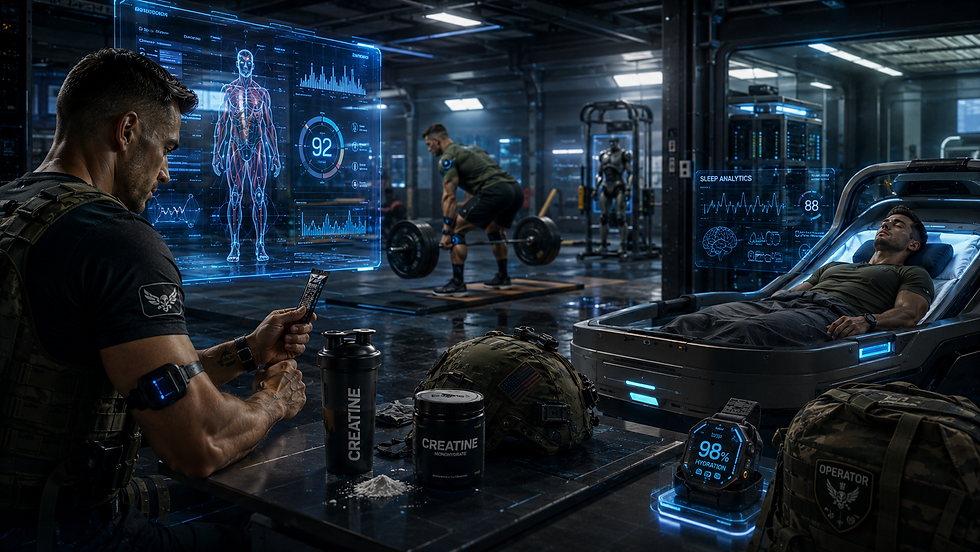
Military Human Performance didn't appear overnight. It evolved through several generations of thinking.
Traditional Physical Training
For many years, military fitness emphasized:
Running
Push-ups
Sit-ups
Periodic testing
While these programs improved general fitness, they often failed to address the complex physical demands of modern military occupations.
Sports Science Influence
Professional sports demonstrated that integrated support teams dramatically improved athlete performance.
Instead of relying on one coach, organizations invested in:
Strength coaches
Physical therapists
Athletic trainers
Sports dietitians
Exercise physiologists
Sports psychologists
The military recognized many of these same principles could improve operational readiness.
Tactical Human Performance
Special Operations Forces became early adopters of embedded Human Performance teams.
These multidisciplinary groups focused on:
Injury reduction
Recovery
Cognitive performance
Sleep
Nutrition
Strength development
Operational resilience
Success within Special Operations eventually influenced conventional military organizations.
Integrated Human Performance
Today, every military branch is expanding Human Performance initiatives in different ways.
Rather than isolated fitness programs, modern readiness now integrates:
Physical training
Medical care
Recovery
Nutrition
Sleep
Behavioral health
Data analytics
This represents one of the largest cultural shifts in military healthcare in recent history.
Air Force Human Performance
Among the most significant developments within the Department of the Air Force has been the expansion of Integrated Operational Support (IOS) and Operational Support Teams (OSTs), or soon to be named True North Plus (TN+).
Rather than relying solely on annual Physical Fitness Assessments, the Air Force increasingly embeds Human Performance professionals directly within operational units.
These multidisciplinary teams often include:
Human Performance Program Managers
Strength and Conditioning Coaches
Physical Therapists
Athletic Trainers
Registered Dietitians
Operational Psychologists
Behavioral Health providers
Physicians
Instead of waiting until injuries occur, these professionals help optimize readiness throughout the year.
This represents a proactive rather than reactive approach to military medicine.
Operational Support Teams work closely with commanders to improve:
Mission readiness
Injury prevention
Recovery
Physical performance
Cognitive resilience
Return-to-duty timelines
Long-term health
Rather than viewing Human Performance as another fitness program, the Air Force increasingly recognizes it as a force multiplier.
The Ariel Hernandez Perspective
Human Performance isn't simply something I've researched. It's something I've helped build.
One of my earliest experiences came while supporting a Rescue Squadron, where I built a robust Human Performance program designed specifically for rescue operators.
The objective wasn't simply to improve PT scores.
It was to build an integrated system that supported operational readiness through:
Strength and conditioning
Injury prevention
Nutrition education
Recovery strategies
Performance coaching
Working alongside rescue personnel quickly reinforced something I've carried throughout my career. Operational athletes require operational solutions. Generic fitness plans don't prepare someone for carrying equipment, operating under sleep deprivation, or sustaining performance during extended missions.
Later, while stationed at Osan Air Base, Republic of Korea, I helped establish another Human Performance Center focused on integrating evidence-based performance services across the installation. The goal wasn't simply to improve annual fitness assessments. It was to create a culture where recovery, movement quality, nutrition, resilience, and readiness became part of everyday operations. Seeing that vision recognized through official Air Force coverage reinforced how important these initiatives had become to the future of military performance.
Those experiences directly shaped the philosophy behind Human Performance HQ.
Because after watching these programs improve mission readiness firsthand, I became convinced that the same evidence-based principles shouldn't remain exclusive to military organizations.
Everyone deserves access to integrated Human Performance.
Army Holistic Health and Fitness (H2F)
If one program symbolizes the military's commitment to Human Performance, it's the Army's Holistic Health and Fitness (H2F) initiative.
H2F represents one of the largest investments in Human Performance anywhere in the world.
Rather than viewing readiness as simply passing the Army Combat Fitness Test (ACFT), H2F recognizes that readiness depends upon five interconnected domains:
Physical Readiness
Nutritional Readiness
Mental Readiness
Spiritual Readiness
Sleep Readiness
Every Brigade Combat Team is designed to receive multidisciplinary support from professionals such as:
Strength Coaches
Physical Therapists
Occupational Therapists
Registered Dietitians
Athletic Trainers
Cognitive Performance Specialists
The philosophy behind H2F aligns perfectly with the broader Human Performance movement.
Performance isn't determined by one variable. It's determined by multiple systems working together.
USSOCOM: Preservation of the Force & Family (POTFF)
Long before Human Performance became common across conventional military units, U.S. Special Operations Command recognized that elite operators required integrated support.
The Preservation of the Force & Family (POTFF) program combines experts across numerous disciplines.
These commonly include:
Strength and Conditioning
Sports Medicine
Physical Therapy
Nutrition
Performance Psychology
Sleep Optimization
Cognitive Performance
Family Support
Rather than maximizing short-term output, POTFF focuses on sustaining elite performance throughout an operator's career.
The lesson is clear. Recovery is not separate from readiness. Recovery creates readiness.
Marine Corps Human Performance
The Marine Corps has similarly embraced Human Performance through initiatives like the Force Fitness Instructor (FFI) program.
Rather than relying solely on unit physical training, Force Fitness Instructors help integrate:
Functional strength
Movement quality
Injury prevention
Mobility
Operational conditioning
This approach prepares Marines for the unpredictable physical demands of combat while reducing preventable musculoskeletal injuries.
The Marine Corps philosophy reflects a broader trend across the Department of Defense: Train for the mission, not simply for the test.
Navy Human Performance
The Navy has expanded Human Performance efforts across multiple operational communities, particularly within aviation, diving, and Naval Special Warfare.
Programs increasingly emphasize:
Physical readiness
Sleep optimization
Nutrition
Strength development
Recovery
Cognitive resilience
As operational demands continue evolving, maintaining readiness requires much more than traditional physical training.
Defense Health Agency: A New Era of Performance Medicine
The Defense Health Agency (DHA) has played an increasingly important role in advancing Human Performance by shifting attention toward prevention and readiness.
Key focus areas include:
Musculoskeletal injury prevention
Warfighter brain health
Sleep optimization
Performance nutrition
Behavioral health
Operational medicine
Rehabilitation
Return-to-duty optimization
This shift reflects an important realization.
Every preventable injury avoided means:
More deployable personnel.
Lower healthcare costs.
Better mission readiness.
Longer military careers.
Human Performance isn't simply about becoming stronger. It's about preserving the fighting force.
Why This Matters Beyond the Military

One of the reasons I believe Human Performance is becoming such an influential field is because military innovation rarely stays inside the military.
Many of today's best practices eventually influence:
Fire departments
Law enforcement agencies
Border Patrol
Secret Service
Professional sports
Healthcare systems
Corporate wellness programs
The same integrated approach that improves operational readiness can improve everyday life.
Whether you're preparing for deployment, training for your first marathon, leading a company, or simply trying to become healthier, the underlying principles remain remarkably similar.
Human Performance isn't reserved for elite operators. It's about helping people become more capable, more resilient, and better prepared for whatever challenges life places in front of them.
Current DoD Human Performance Trends Shaping the Future of Readiness

If you've followed military Human Performance over the last five years, you've probably noticed something.
The conversation has changed.
The Department of Defense is no longer asking whether Human Performance works.
Instead, the focus has shifted toward one question, How do we scale Human Performance across the entire force?
That's a major change.
For years, embedded Human Performance teams were largely concentrated within Special Operations Forces and elite units. Today, those same principles are expanding throughout conventional military organizations because the evidence continues to demonstrate improvements in readiness, injury prevention, recovery, and long-term force health.
Several major trends are driving this transformation.
Wearable Technology Is Becoming Standard
Ten years ago, wearable technology was primarily marketed to endurance athletes.
Today, wearable devices have become valuable tools for military Human Performance professionals.
Many embedded teams now monitor objective metrics such as:
Sleep duration
Resting heart rate
Heart Rate Variability (HRV)
Training load
Recovery
Daily readiness
Physical activity
Cardiovascular fitness
Devices from companies like Garmin, Polar, WHOOP, and Oura continue to evolve, giving Human Performance professionals additional information to individualize training without relying solely on subjective feedback.
One important point I always emphasize is that wearables shouldn't replace coaching. They should improve coaching.
Numbers provide context. Experienced professionals provide interpretation.
Performance Analytics Are Changing Military Decision-Making
Modern Human Performance isn't just about collecting more data. It's about collecting better data. Across military Human Performance programs, professionals are increasingly evaluating:
Injury trends
Force production
Recovery status
Physical readiness
Movement quality
Workload management
Return-to-duty progression
Rather than waiting for injuries to accumulate, leaders can identify potential problems much earlier. This proactive approach helps keep more personnel healthy and available for operational missions.
Recovery Is Finally Receiving the Attention It Deserves
One of the biggest cultural changes I've witnessed throughout my career is how recovery is viewed.
When I first entered the profession, recovery often meant, "Take a day off."
Today, recovery has become an entire discipline.
Military Human Performance programs increasingly emphasize:
Sleep optimization
Mobility
Recovery nutrition
Stress management
Active recovery
Deload planning
Heat recovery
Hydration strategies
That's encouraging because recovery isn't the opposite of training.
Recovery is where adaptation occurs.
The best tactical athletes aren't necessarily those who train the hardest. They're often the ones who recover the smartest.
Artificial Intelligence Will Support, Not Replace, Human Performance Professionals
Artificial Intelligence is beginning to influence Human Performance across healthcare, sports science, and military readiness.
Potential applications include:
Injury prediction
Readiness monitoring
Training recommendations
Recovery planning
Sleep analytics
Nutritional guidance
Operational workload management
Although AI will undoubtedly improve decision-making, I don't believe it will replace Human Performance professionals.
Human Performance is ultimately about people. Technology can identify patterns. It can't build trust. The future belongs to professionals who know how to combine science, technology, and human relationships.
Could Creatine Soon Be Added to Military MREs?
One of the most interesting conversations in military nutrition today involves a surprisingly familiar supplement:
Creatine monohydrate.
In 2024, military researchers and Human Performance experts urged Congress to encourage the Department of Defense to evaluate adding creatine to Meals, Ready-to-Eat (MREs). The discussion, highlighted by Military Times, reflects growing recognition that creatine may support many of the physiological and cognitive demands faced by today's warfighters.
Why is this receiving so much attention? Because creatine is no longer viewed simply as a bodybuilding supplement.
Decades of research demonstrate benefits for:
Strength
Power
Lean muscle preservation
High-intensity exercise performance
Recovery between repeated bouts of activity
Potential cognitive support during sleep deprivation and periods of high mental demand
Improved training adaptations
Many of these benefits directly align with military operational requirements.
Military personnel frequently experience:
Sleep restriction
Heavy equipment loads
High operational tempo
Repeated physical exertion
Environmental heat stress
Limited recovery opportunities
These are precisely the conditions where creatine has shown promise in the scientific literature. Of course, incorporating creatine into operational rations isn't as simple as adding another ingredient.
Military planners would need to consider:
Shelf stability
Packaging requirements
Long-term storage
Cost
Standardized dosing
Distribution logistics
Procurement processes
That's why the Pentagon continues evaluating the concept rather than immediately implementing it.
Nevertheless, the conversation itself illustrates a broader shift.
The Department of Defense is no longer focused solely on preventing deficiencies. It's exploring nutritional strategies that actively enhance performance.
What Military Members Can Do Today
One question I hear frequently is, "Should I wait until the military changes policy?"
My answer is simple.
No.
Whether creatine eventually becomes part of military rations or not, there are evidence-based strategies every service member can implement today.
Focus on mastering the fundamentals:
Progressive strength training
Aerobic conditioning
High-quality sleep
Adequate protein intake
Daily hydration
Intelligent recovery
Stress management
Consistent movement
Once those habits are in place, supplements can become useful tools rather than crutches.
Creatine monohydrate remains one of the most extensively researched dietary supplements available. For healthy individuals, decades of evidence support its safety and effectiveness when used appropriately alongside training and sound nutrition.
The Human Performance HQ Tactical Readiness Framework
One lesson I've learned throughout my career is that elite performance doesn't come from elite genetics. It comes from elite systems. That's why I teach the:
Human Performance HQ Tactical Readiness Framework.
R — Readiness
Train for your occupation, not just your fitness test. Prepare your body for real-world demands.
E — Energy
Fuel your performance through proper nutrition, hydration, and recovery.
A — Adaptation
Gradually increase training demands while allowing adequate recovery. Performance improves through progressive adaptation.
D — Durability
Reduce injury risk through mobility, strength, movement quality, and intelligent programming.
Y — Your Recovery
Sleep.
Hydrate.
Recover.
Repeat.
Recovery isn't downtime.
It's preparation for tomorrow's mission.
10 DoD Human Performance Trends Every Service Member Should Watch
Expansion of Integrated Operational Support Teams.
Continued Army H2F implementation.
Greater emphasis on sleep optimization.
Wearable technology integration.
Force plate testing and movement analytics.
AI-assisted readiness monitoring.
Expanded performance nutrition initiatives.
Increased focus on musculoskeletal injury prevention.
Greater investment in cognitive performance and brain health.
Continued evaluation of evidence-based supplements such as creatine.
The Ariel Hernandez Perspective
Looking back over my career, one thing has become incredibly clear. Human Performance isn't about creating superhuman operators. It's about helping ordinary people consistently perform at extraordinary levels. My experience contributing to military human-performance, included previous work associated with the Air Force Pararescue and Fighter Wings. Those experiences reinforced an important lesson: effective human performance depends on collaboration across disciplines.
The best Human Performance programs don't rely on one exceptional coach. They rely on exceptional collaboration.
Strength coaches.
Physical therapists.
Dietitians.
Behavioral health providers.
Medical teams.
And most importantly Leadership support.
Everyone working toward one common objective: Keep people healthy enough to accomplish the mission.
That systems-based philosophy also informs the educational approach I use at. Human Performance HQ.
I want to make the same evidence-based strategies available to anyone who wants to improve their health, resilience, and performance, not just military personnel.
Because Human Performance isn't a military concept. It's a human concept.
FAQs
What is DoD Human Performance?
DoD Human Performance is the Department of Defense's multidisciplinary approach to improving physical readiness, cognitive performance, injury prevention, nutrition, recovery, sleep, and resilience across the military. Rather than reacting to injuries after they occur, these initiatives focus on proactively optimizing service members throughout their careers. Programs differ by service branch but share the common goal of improving operational readiness.
What is Integrated Operational Support (IOS)?
Integrated Operational Support is the Air Force's embedded Human Performance model that places multidisciplinary experts within operational units. These teams commonly include strength and conditioning coaches, physical therapists, athletic trainers, dietitians, behavioral health providers, and Human Performance Program Managers. Their mission is to improve readiness, reduce injuries, and support Airmen before problems develop.
What is Army Holistic Health and Fitness (H2F)?
Holistic Health and Fitness (H2F) is the Army's comprehensive readiness system built around five domains: physical, nutritional, mental, spiritual, and sleep readiness. Brigade Combat Teams receive multidisciplinary support from professionals specializing in performance optimization and injury prevention. H2F represents one of the largest Human Performance investments in the world.
What is Preservation of the Force & Family (POTFF)?
POTFF is USSOCOM's integrated Human Performance program supporting Special Operations personnel and their families. It combines strength and conditioning, nutrition, physical therapy, performance psychology, sleep optimization, and recovery into one coordinated system designed to sustain elite performance throughout demanding careers. POTFF 2.0 will be the future of USSOCOM Human Performance.
Is creatine approved for military members?
Yes. Creatine is not prohibited for healthy military members, and it remains one of the most extensively researched dietary supplements available. Service members should always follow their branch's guidance and consult their healthcare provider when appropriate, especially if they have underlying medical conditions or questions about supplementation.
Why is Congress discussing creatine in MREs?
Military researchers have proposed evaluating creatine for inclusion in Meals, Ready-to-Eat because research suggests it may support strength, recovery, lean muscle maintenance, and cognitive performance during operational stress. The discussion reflects the military's broader shift toward evidence-based performance nutrition. Practical considerations such as stability, logistics, and cost must still be addressed before any implementation.
How can military members improve Human Performance today?
The greatest improvements still come from consistently applying the fundamentals: strength training, aerobic fitness, adequate sleep, quality nutrition, hydration, recovery, and intelligent programming. Evidence-based supplements such as creatine can complement those habits but should never replace them. Sustainable systems consistently outperform short-term fixes.
Continue Learning at Human Performance HQ
Continue exploring evidence-based resources:
Official Department of Defense & Military Resources
Department of Defense.
Department of Defense Official Website. https://www.defense.gov/
Defense Health Agency (DHA).
Human Performance Resources by CHAMP (HPRC) https://www.hprc-online.org/
Air Force Medical Service.
Air Force Medical Service Official Website. https://www.airforcemedicine.af.mil/
Air Force Medical Service – Operational Support Teams. https://www.airforcemedicine.af.mil/News/Display/Article/3411825/operational-support-teams-improve-airmen-readiness/
Osan Air Base Human Performance Center. https://www.osan.af.mil/News/Photos/igphoto/2003121190/
U.S. Army.
FM 7-22: Holistic Health and Fitness (H2F). https://armypubs.army.mil/ProductMaps/PubForm/Details.aspx?PUB_ID=1025968
Army Public Health Center – Holistic Health and Fitness. https://ph.health.mil/topics/healthyliving/fit/Pages/Holistic-Health-and-Fitness.aspx
U.S. Special Operations Command
Preservation of the Force & Family (POTFF). https://www.socom.mil/POTFF
Marine Corps
Force Fitness Instructor (FFI) Program. https://www.fitness.marines.mil/
Navy
Navy Operational Fitness & Fueling System (NOFFS). https://www.navyfitness.org/
Tactical Human Performance
National Strength and Conditioning Association (NSCA) Tactical Strength & Conditioning (TSAC). https://www.nsca.com/certification/tsac-f/
NSCA Tactical Annual Training. https://www.nsca.com/events/tactical-annual-training/
Military Nutrition
Military Times
Meal Ready to Bulk? Pentagon Urged to Add Creatine to MREs.https://www.militarytimes.com/news/your-military/2024/07/11/meal-ready-to-bulk-pentagon-urged-to-add-creatine-to-mres/
Peer-Reviewed Research
Kreider RB, Kalman DS, Antonio J, et al. (2017). International Society of Sports Nutrition Position Stand: Safety and Efficacy of Creatine Supplementation in Exercise, Sport, and Medicine. https://jissn.biomedcentral.com/articles/10.1186/s12970-017-0173-z
Antonio J, Candow DG, Forbes SC, et al. (2021). Common Questions and Misconceptions About Creatine Supplementation. https://jissn.biomedcentral.com/articles/10.1186/s12970-021-00412-w
Smith-Ryan AE, Cabre HE, Eckerson JM, Candow DG. (2021). Creatine Supplementation in Women's Health. https://www.mdpi.com/2072-6643/13/3/877
Avgerinos KI, Spyrou N, Bougioukas KI, Kapogiannis D. (2018). Effects of Creatine Supplementation on Cognitive Function. https://www.sciencedirect.com/science/article/pii/S0531556517308380
Rawson ES, Venezia AC. (2011). Use of Creatine in the Elderly and Effects on Cognitive Function. https://link.springer.com/article/10.1007/s00726-010-0575-4
Sawka MN, Burke LM, Eichner ER, et al. (2007). Exercise and Fluid Replacement. https://journals.lww.com/acsm-msse/fulltext/2007/02000/exercise_and_fluid_replacement.22.aspx
Armstrong LE, Johnson EC, McKenzie AL, et al. (2021). Hydration Biomarkers and Performance Outcomes. https://www.mdpi.com/2072-6643/13/7/2444
Cheuvront SN, Kenefick RW. (2014). Dehydration: Physiology, Assessment, and Performance Effects. https://journals.physiology.org/doi/full/10.1002/cphy.c130017
Maughan RJ, Shirreffs SM, Watson P. (2007). Exercise, Heat, Hydration and Electrolyte Replacement. https://www.tandfonline.com/doi/full/10.1080/02640410701607330
Garber CE, Blissmer B, Deschenes MR, et al. (2011). Quantity and Quality of Exercise for Developing and Maintaining Cardiorespiratory, Musculoskeletal, and Neuromotor Fitness. https://journals.lww.com/acsm-msse/fulltext/2011/07000/quantity_and_quality_of_exercise_for_developing.26.aspx
Simpson NS, Gibbs EL, Matheson GO. (2017). Optimizing Sleep to Maximize Performance. https://onlinelibrary.wiley.com/doi/10.1111/sms.12703


