
Masters in Human Performance
Updated: Oct 8
Is It Worth It? Career Paths, Salary, and How to Choose the Right Graduate Program
If you've been researching a Master's in Human Performance, you've probably noticed something.
Every university promises you'll become a leader in sports science, exercise physiology, strength and conditioning, or human performance optimization.
But very few programs answer the question that actually matters:
Will this degree help me build the career I want?
That's the question I wish someone had answered for me.
Over the last decade, I've completed graduate education in exercise, nutrition, health, and business while building a career in military Human Performance. Along the way, I discovered something important.
A graduate degree doesn't create expertise. It accelerates it, if you pair it with practical experience.
In my career I've helped establish Human Performance Centers supporting operational military units, and collaborate daily with strength coaches, physical therapists, registered dietitians, athletic trainers, physicians, psychologists, and operational leadership.
Looking back, one of the most influential experiences in my education was earning my Master of Science in Exercise and Nutrition Science from the University of Tampa.
That program fundamentally changed how I approached performance.
It taught me to stop thinking like a personal trainer and start thinking like a performance professional.
Rather than asking, "How do I make someone stronger?" I began asking, "How do all of the systems affecting human performance work together?"
That mindset eventually became the foundation of Human Performance HQ.
Whether you're considering graduate school immediately after college, returning to school after several years, or trying to determine whether a master's degree is worth the investment, this guide will help you make an informed decision.
We'll cover:
What a Master's in Human Performance actually teaches
Different types of Human Performance graduate programs
Career opportunities
Salary expectations
Military and tactical Human Performance careers
How to choose the right graduate program
Lessons from my own educational journey
Whether graduate school is actually necessary
Quick Answer
Is a Master's in Human Performance Worth It?
For many professionals, yes, especially if your career goals include leadership, tactical human performance, collegiate athletics, research, healthcare, or advanced coaching.
However, a master's degree is most valuable when combined with meaningful practical experience, strong communication skills, and evidence-based certifications.
Graduate school should expand your ability to solve problems, not simply add another credential to your résumé.
What Is a Master's in Human Performance?

A Master's in Human Performance is an advanced graduate degree focused on understanding how the human body and mind perform under physical, cognitive, environmental, and occupational demands.
Unlike undergraduate exercise science programs that often emphasize foundational knowledge, graduate programs typically explore:
Exercise physiology
Sports nutrition
Biomechanics
Motor learning
Performance testing
Recovery science
Research methods
Leadership
Performance programming
Human optimization
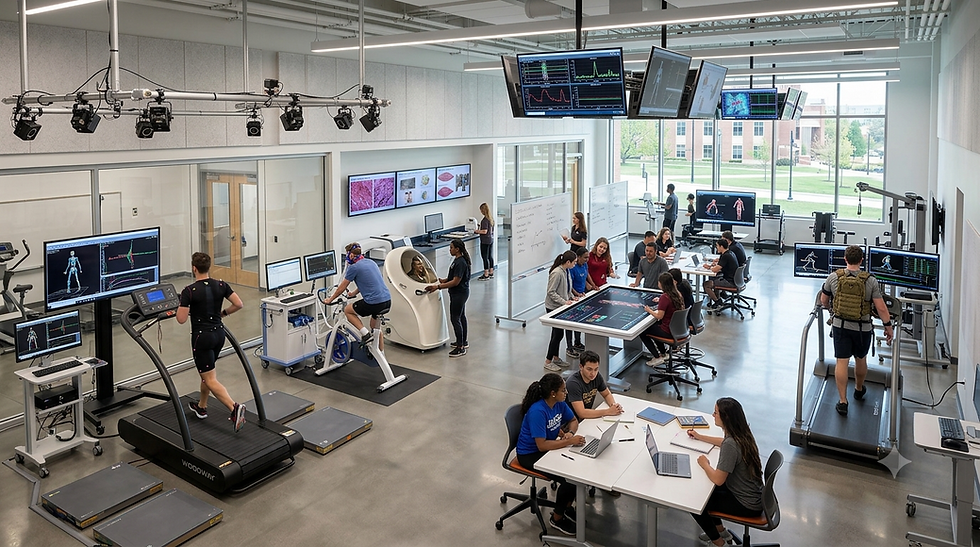
Many programs also incorporate applied laboratory work and research projects that teach students how to interpret scientific literature and translate research into practical applications.
That's one of the biggest differences between undergraduate and graduate education.
Graduate school teaches you how to think, not simply what to know.
Why Human Performance Graduate Degrees Are Growing
The demand for Human Performance professionals has expanded dramatically over the past decade.
Professional sports organizations were among the first to invest heavily in integrated performance teams.
Now the same philosophy has expanded into:
Military Human Performance
Tactical organizations
Fire departments
Law enforcement
Border Patrol
Healthcare systems
Universities
Corporate wellness
Executive performance coaching
Organizations increasingly recognize that investing in people before injuries occur is far more effective than treating problems afterward.
Graduate education helps prepare professionals to work within these increasingly multidisciplinary environments.
The Ariel Hernandez Perspective

When I decided to pursue graduate education, I wasn't chasing letters after my name.
I wanted to become better at helping people.
One of the most influential decisions I made was enrolling in the Master of Science in Exercise and Nutrition Science program at the University of Tampa.
That program gave me much more than advanced scientific knowledge. It changed the way I approached human performance. Rather than viewing exercise, nutrition, recovery, and physiology as separate disciplines, I began understanding how they interact to influence overall performance.
The coursework challenged me to evaluate research critically rather than simply accepting conventional fitness advice.
It strengthened my understanding of:
Exercise physiology
Sports nutrition
Performance assessment
Research methodology
Evidence-based coaching
Those skills have followed me throughout my career.
Later in my experience establishing Human Performance Centers supporting Military personnel, I've found myself applying many of the same principles I first explored during graduate school.
Even with all the years of experience in Human Performance, I still rely on that scientific foundation when collaborating with:
Strength and Conditioning Coaches
Physical Therapists
Registered Dietitians
Athletic Trainers
Physicians
Operational leadership
Graduate school didn't teach me every answer. It taught me how to ask better questions. Looking back, that may have been the most valuable lesson of all.
What Will You Learn in a Human Performance Master's Program?
Although every university differs slightly, most graduate programs cover several core areas.
Exercise Physiology
This forms the foundation of most Human Performance programs.
Topics often include:
Energy systems
Cardiovascular physiology
Skeletal muscle physiology
Hormonal responses
Fatigue
Training adaptations
Understanding these systems helps professionals design more effective training programs.
Sports Nutrition
Performance depends heavily on nutrition.
Graduate-level nutrition courses typically explore:
Macronutrients
Micronutrients
Hydration
Supplementation
Recovery nutrition
Body composition
Metabolism
As Human Performance continues evolving, nutrition has become one of the profession's most influential disciplines.
Biomechanics
Movement efficiency affects:
Performance
Injury risk
Strength development
Running economy
Graduate biomechanics courses teach students how to analyze movement using both observation and technology.
Research Methods
One of the greatest advantages of graduate school is learning how to interpret scientific research.
Students often learn:
Study design
Statistics
Critical appraisal
Evidence synthesis
Scientific writing
This becomes incredibly valuable because the Human Performance industry is filled with misinformation. Professionals capable of separating evidence from marketing immediately become more valuable.
Strength and Conditioning
Many programs include advanced instruction in:
Program design
Periodization
Resistance training
Power development
Speed
Conditioning
Athlete monitoring
These concepts extend far beyond athletics. They're increasingly applied within military and tactical Human Performance.
Different Types of Human Performance Graduate Programs
Not every master's degree looks the same. Choosing the right specialization depends on your career goals.
Human Performance
Ideal for:
Tactical Human Performance
Military readiness
Performance leadership
Human optimization
Exercise Physiology
Excellent for:
Clinical exercise
Research
Healthcare
Cardiac rehabilitation
Exercise and Nutrition Science
Programs like the University of Tampa's Master of Science in Exercise and Nutrition Science combine two of the most influential disciplines in Human Performance.
Rather than studying exercise in isolation, students learn how nutrition influences:
Recovery
Strength
Endurance
Body composition
Metabolism
Long-term health
From my own experience, this integrated approach proved incredibly valuable because real-world Human Performance rarely separates training from nutrition.
Kinesiology
Often emphasizes:
Human movement
Motor control
Rehabilitation
Teaching
Coaching
Sports Science
Focuses heavily on:
Athlete monitoring
Performance analytics
Biomechanics
Sports technology
Data interpretation
Human Performance Beyond Athletics
One of the biggest misconceptions about graduate education is that you'll only work with athletes.
That couldn't be further from the truth.
Today's Human Performance graduates work with:
Air Force Operational Support Teams (OST)
True North Plus (TN+)
Army Holistic Health and Fitness (H2F)
USSOCOM POTFF
Fire departments
Police agencies
Border Patrol
Healthcare systems
Universities
Fortune 500 companies
Private performance facilities
Performance has become everyone's business.
Should You Earn a Master's Immediately?
Not necessarily.
One recommendation I frequently give students is this: Get experience first.
Graduate school becomes much more valuable when you have practical experience to connect it with.
When you can relate classroom discussions to real clients, athletes, patients, or military personnel, your education becomes significantly more meaningful.
For me, combining graduate education with military service and later operational Human Performance work accelerated my professional growth far more than either experience could have alone.
Common Misconceptions
"A master's guarantees a high-paying job."
It doesn't. Experience, communication skills, and leadership often matter just as much.
"Graduate school is only for researchers."
Many graduates work directly with athletes, military personnel, first responders, and patients.
"Online programs aren't valuable."
Many high-quality online graduate programs now provide exceptional education when paired with practical experience.
"The degree matters more than the experience."
In my experience, employers consistently value professionals who combine strong education with real-world application.
10 Signs a Master's in Human Performance May Be Right for You
You're passionate about evidence-based performance.
You enjoy solving complex problems.
You want leadership opportunities.
You're interested in military or tactical Human Performance.
You enjoy learning continuously.
You want to work with multidisciplinary teams.
You value science over fitness trends.
You enjoy helping people improve.
You're considering research or teaching.
You see Human Performance as a lifelong profession rather than simply a job.
Looking Ahead
A Master's in Human Performance isn't simply about earning another diploma.
It's about developing the scientific mindset, practical skills, and interdisciplinary perspective needed to solve increasingly complex performance problems.
As Human Performance continues expanding into healthcare, military readiness, public safety, and corporate wellness, graduate education will likely become even more valuable for professionals seeking leadership roles.
The Human Performance HQ Graduate Success Framework
One of the biggest questions prospective graduate students ask is:
"How do I make sure my master's degree actually leads to the career I want?"
The truth is that earning the degree is only one part of the equation.
I've worked alongside professionals with impressive résumés who struggled to apply their knowledge, and I've met others with fewer credentials who became exceptional Human Performance leaders because they combined education with curiosity, humility, and practical experience.
Looking back on my own journey, from earning my Master of Science in Exercise and Nutrition Science at the University of Tampa, completing an MBA, beginning doctoral coursework in Human Performance, establishing Air Force Human Performance Centers, and experience as a Human Performance Expert, I've realized that long-term success follows a consistent pattern. That's why I teach what I call the...
Human Performance HQ Graduate Success Framework.
G – Gain Practical Experience
No graduate degree can replace experience.
While you're in school, actively seek opportunities to work with:
Collegiate athletic departments
Human Performance Centers
Sports medicine clinics
Tactical Human Performance programs
Military organizations
Private performance facilities
Research laboratories
The earlier you begin applying classroom knowledge, the more valuable your education becomes.
R – Read the Research
One habit that dramatically accelerated my career was learning to read research rather than relying solely on textbooks or social media.
Graduate school should teach you how to critically evaluate:
Randomized controlled trials
Systematic reviews
Meta-analyses
Position stands
Clinical practice guidelines
The Human Performance industry evolves rapidly. Professionals who understand research remain ahead of trends instead of chasing them.
A – Apply What You Learn
Knowledge without application has limited value. Throughout graduate school, challenge yourself to translate research into practical strategies.
Ask questions like:
How would this improve an athlete's performance?
Could this reduce injuries in military personnel?
Would this help an older adult maintain independence?
Can I explain this concept in simple language?
If you can't explain it simply, you probably don't understand it deeply enough.
D – Develop Leadership Skills
Human Performance professionals rarely work alone. Success often depends on collaborating with:
Physicians
Physical therapists
Registered dietitians
Athletic trainers
Coaches
Military commanders
Organizational leaders
Leadership, communication, and humility are just as important as physiology. Some of the best professionals I've worked with weren't the loudest voices in the room. They were the best listeners.
U – Understand Systems
One lesson my MBA reinforced is that organizations function as systems.
Whether you're working in professional sports or the Department of Defense, improving performance requires understanding:
Leadership
Budgeting
Operations
Program evaluation
Change management
Organizational culture
Human Performance isn't just exercise science. It's systems thinking.
A – Adapt Continuously
The profession won't look the same ten years from now.
Technology continues changing:
Sports science
Recovery monitoring
Wearables
Artificial intelligence
Data analytics
Precision nutrition
Graduate school should prepare you to become a lifelong learner, not simply complete coursework.
T – Teach Others
The professionals who make the greatest impact become educators. Whether you're coaching one athlete or briefing a Wing Commander, your ability to communicate science clearly determines your influence. That's one of the reasons I created Human Performance HQ. Teaching reinforces learning.
Online vs. In-Person Master's Programs
One of the most common questions I receive is whether online graduate programs are "worth it?"
The answer depends less on the delivery format and more on the quality of the program and how you apply what you learn.
Online Programs
Advantages:
Greater flexibility
Continue working full-time
Often lower relocation costs
Access to programs nationwide
Challenges:
Less face-to-face networking
Requires greater self-discipline
Limited laboratory experiences
In-Person Programs
Advantages:
Hands-on laboratory work
Research opportunities
Strong faculty mentorship
Networking
Immediate collaboration
Challenges:
Higher relocation costs
Less flexibility
Time away from full-time employment
In my opinion, practical experience matters far more than whether your lectures occur online or in a classroom.
Certifications That Complement a Master's Degree
Graduate education provides depth. Certifications provide specialization. Some of the most respected certifications include:
NSCA Certified Strength and Conditioning Specialist (CSCS)
The gold standard for strength and conditioning professionals.
NSCA Tactical Strength and Conditioning Facilitator (TSAC-F)
Excellent for careers supporting:
Military
Law enforcement
Fire departments
Border Patrol
Tactical organizations
ACSM Exercise Physiologist (EP-C)
Ideal for healthcare and clinical exercise settings.
USA Weightlifting Level 1
Helpful for coaching Olympic lifts and power development.
Precision Nutrition
Provides practical nutrition coaching skills that complement graduate education.
Career Opportunities After Graduation

A Master's in Human Performance opens doors across numerous industries.
Potential careers include:
Human Performance Program Manager
Exercise Physiologist
Sports Scientist
Strength and Conditioning Coach
Tactical Strength Coach
Performance Director
Military Human Performance Specialist
Corporate Wellness Consultant
University Faculty
Research Scientist
Performance Technology Consultant
The beauty of Human Performance is that your skills transfer across industries.
Salary Expectations
Although salaries vary by region and experience, approximate ranges include:
Career | Typical Salary |
Strength Coach | $50,000–$90,000+ |
Exercise Physiologist | $55,000–$90,000 |
Sports Scientist | $75,000–$140,000+ |
Tactical Strength Coach | $75,000–$130,000+ |
Human Performance Specialist | $70,000–$120,000+ |
Human Performance Program Manager | $95,000–$160,000+ |
Corporate Performance Consultant | Highly Variable |
University Faculty | $70,000–$150,000+ |
Leadership positions within military Human Performance programs often offer excellent benefits, retirement systems, and opportunities to influence thousands of service members.
The Future of Graduate Education in Human Performance
The profession continues evolving rapidly. Future graduate programs will likely incorporate:
Artificial Intelligence
Wearable technology
Force plate analysis
Motion capture
Precision nutrition
Blood biomarker interpretation
Recovery analytics
Performance dashboards
Machine learning
Digital coaching
Tomorrow's Human Performance professionals will combine traditional exercise science with technology, data interpretation, and behavioral psychology.
Ariel Hernandez Perspective On Graduate Education in Human Performance
Looking back, I'm grateful that I didn't stop learning after earning one graduate degree.
My Master of Science in Exercise and Nutrition Science from the University of Tampa gave me the scientific framework that still guides my thinking today.
Later, completing an MBA expanded my understanding of leadership, organizational behavior, operations, and systems thinking, skills that have been invaluable while developing Human Performance programs within the Air Force.
Beginning doctoral work in Human Performance challenged me to think even more critically about research, although my career ultimately led me toward applying science rather than remaining in academia.
Operating Human Performance Programs reinforced one lesson over and over again:
The most successful Human Performance professionals aren't defined by the number of degrees they earn.
They're defined by their ability to translate science into meaningful improvements for the people they serve.
That's ultimately why Human Performance HQ exists.
I wanted to build a platform that bridges the gap between cutting-edge research and practical application, helping athletes, military members, first responders, healthcare professionals, and everyday individuals perform at their highest level.
10 Reasons a Master's in Human Performance Is Worth Considering
Deepens your understanding of exercise science.
Improves evidence-based decision-making.
Expands leadership opportunities.
Opens careers beyond traditional fitness.
Enhances credibility within multidisciplinary teams.
Develops critical thinking skills.
Increases opportunities in military and tactical performance.
Strengthens research literacy.
Creates networking opportunities with faculty and professionals.
Helps prepare you for leadership roles in one of the fastest-growing health professions.
FAQ’S
Is a Master's in Human Performance worth it?
For many professionals, yes. A master's degree can strengthen your scientific foundation, improve career opportunities, and prepare you for leadership positions in sports science, military Human Performance, healthcare, and research. Its value increases significantly when paired with practical experience and recognized certifications.
What careers can I pursue with a Master's in Human Performance?
Graduates work in professional sports, collegiate athletics, military Human Performance programs, tactical organizations, healthcare systems, universities, corporate wellness, and private performance facilities. Common roles include Human Performance Program Manager, Exercise Physiologist, Strength and Conditioning Coach, Sports Scientist, and Performance Director.
Is online or in-person graduate school better?
Both formats can provide an excellent education. Online programs offer flexibility for working professionals, while in-person programs often provide greater laboratory and networking opportunities. Ultimately, your commitment to applying what you learn is more important than the delivery format. Ariel Hernandez attended, and recommends The University of Tampas Masters in Exercise and Nutrition Science.
Do I need certifications if I already have a master's degree?
Yes. Certifications such as the NSCA CSCS, TSAC-F, ACSM EP-C, and Precision Nutrition complement graduate education by demonstrating specialized knowledge and professional competency. Employers often value both advanced degrees and respected certifications.
Can a Master's in Human Performance lead to military careers?
Absolutely. Programs like Air Force Integrated Operational Support (IOS), Army Holistic Health and Fitness (H2F), and USSOCOM's Preservation of the Force & Family (POTFF) increasingly employ graduate-trained Human Performance professionals. These careers allow you to directly support operational readiness and long-term force health.
How important is research in Human Performance?
Research is the foundation of evidence-based practice. Graduate education teaches professionals how to critically evaluate scientific literature and apply it appropriately. This skill helps distinguish effective interventions from marketing claims and short-lived fitness trends.
What makes a successful Human Performance professional?
Successful professionals combine scientific knowledge, practical experience, communication skills, humility, and lifelong curiosity. They understand that Human Performance isn't about knowing every answer, it's about continuously learning and applying evidence to improve people's lives.
Key Takeaways
A Master's in Human Performance can be a valuable investment when aligned with your career goals.
Practical experience is just as important as graduate education.
The University of Tampa's Exercise and Nutrition Science program helped shape the scientific mindset that continues to guide my career.
Human Performance careers continue expanding across sports, healthcare, the military, public safety, and corporate wellness.
Graduate education should develop your ability to solve complex problems—not simply earn another credential.
Lifelong learning remains one of the most valuable traits in this profession.
Continue Exploring Human Performance HQ
Expand your knowledge with these cornerstone resources:
Join the Human Performance HQ Community
Subscribe to the Human Performance HQ Newsletter for evidence-based insights on fitness, nutrition, recovery, sleep, tactical performance, healthy aging, and leadership in Human Performance.
Our mission is simple:
PERFORM | EVOLVE | ACHIEVE
PROFESSIONAL RESOURCES FOR HUMAN PERFORMANCE
University & Graduate Education
University of Tampa – Master of Science in Exercise and Nutrition Science https://www.ut.edu/graduate-degrees/master-of-science-in-exercise-and-nutrition-science
Professional Organizations
American College of Sports Medicine (ACSM) https://www.acsm.org/
National Strength and Conditioning Association (NSCA) https://www.nsca.com/
NSCA Certified Strength and Conditioning Specialist (CSCS) https://www.nsca.com/certification/cscs/
NSCA Tactical Strength and Conditioning Facilitator (TSAC-F) https://www.nsca.com/certification/tsac-f/
Military Human Performance Resources
Air Force Medical Service https://www.airforcemedicine.af.mil/
Department of the Army – FM 7-22 Holistic Health and Fitness (H2F) https://armypubs.army.mil/ProductMaps/PubForm/Details.aspx?PUB_ID=1025968
USSOCOM – Preservation of the Force & Family (POTFF) https://www.socom.mil/POTFF
Human Performance Resources by CHAMP (HPRC) https://www.hprc-online.org/
Peer-Reviewed Literature
Garber CE, Blissmer B, Deschenes MR, et al. (2011). Quantity and Quality of Exercise for Developing and Maintaining Cardiorespiratory, Musculoskeletal, and Neuromotor Fitness. Medicine & Science in Sports & Exercise. https://journals.lww.com/acsm-msse/fulltext/2011/07000/quantity_and_quality_of_exercise_for_developing.26.aspx
Kreider RB, Kalman DS, Antonio J, et al. (2017). International Society of Sports Nutrition Position Stand: Safety and Efficacy of Creatine Supplementation in Exercise, Sport, and Medicine. https://jissn.biomedcentral.com/articles/10.1186/s12970-017-0173-z
Antonio J, Candow DG, Forbes SC, et al. (2021). Common Questions and Misconceptions About Creatine Supplementation. https://jissn.biomedcentral.com/articles/10.1186/s12970-021-00412-w


